Introduction
In December 2008, a document called Charter 08 appeared on the Chinese internet. Initially signed, under their real names, by 303 Chinese citizens, it called for constitutional revision, an independent judiciary, freedom of expression, and democratic elections. On the eve of its release, one of its principal drafters, the scholar Liu Xiaobo, was taken from his Beijing home by police. A year later he was sentenced to eleven years in prison for “inciting subversion of state power” — a punishment widely regarded at the time as among the harshest imposed for speech offences. In 2010, from his cell in Jinzhou Prison in Liaoning, he became a Nobel Peace Prize laureate; at the award ceremony there was only an empty chair. On 13 July 2017, Liu Xiaobo died of terminal liver cancer in a hospital in Shenyang, under close guard, aged 61. His eleven-year sentence would not have expired until June 2020.
Background and causes
Charter 08 grew out of several anniversaries that converged in 2008. Its preamble notes that the year marked the centenary of China’s first constitutional document (the Qing court’s Outline of a Constitution of 1908), the 60th anniversary of the Universal Declaration of Human Rights, the 30th anniversary of the Democracy Wall movement, and ten years since the Chinese government signed the International Covenant on Civil and Political Rights — a covenant signed but never ratified by the National People’s Congress. The drafters argued that “freedom, equality, and human rights are universal values shared by humankind, and that democracy, republicanism, and constitutional government form the basic institutional framework of modern politics,” and that China should not treat economic development as a substitute for political reform.
In form, the charter was modelled on Charter 77, the 1977 Czechoslovak manifesto in which Václav Havel and others demanded that their government honour the human-rights commitments it had itself signed; Charter 77 became one of the emblematic documents of Eastern Europe’s democratisation. Charter 08 likewise grounded its demands in China’s own constitution and in international covenants China has signed, and it advocated a peaceful, gradual, non-violent path to reform.
The text was drafted principally by Zhang Zuhua; Liu Xiaobo was among those who revised it and spent months soliciting comments and signatures. Liu himself is the other key to the story. Born in Changchun on 28 December 1955, he graduated from Jilin University in 1982 and received a doctorate in literature from Beijing Normal University in 1988. A “dark horse” of 1980s literary criticism, famous for his unsparing reviews, he held visiting scholarships at Columbia University, the University of Oslo, and the University of Hawaii. During the 1989 Tiananmen protests he returned from the United States to join the movement; on 2 June 1989 he and three friends — Hou Dejian, Zhou Duo, and Gao Xin — began a hunger strike in the square in support of the students, becoming known as the “Four Gentlemen.” On the eve of the crackdown he helped negotiate the students’ peaceful withdrawal from the square. His life changed permanently afterwards: imprisoned from 1989 to 1991; detained for some nine months in 1995–96 after co-signing petitions calling for a reassessment of June Fourth; sentenced to three years of re-education through labour in 1996 and released in 1999; and president of the Independent Chinese PEN Center from 2003 to 2007. His books were banned in China and he lived under constant police surveillance. In 2008, his name appeared among the initiators of Charter 08.
What the charter proposes
Charter 08 consists of a preamble, a section of “fundamental concepts,” a section of “basic proposals,” and a conclusion. The six concepts — freedom, human rights, equality, republic, democracy, and constitutionalism — are defined briefly: freedom covers rights of speech, publication, belief, assembly, and association; human rights rest on the idea that “the people are the subject of the state”; democracy means sovereignty of the people and governments chosen by election; constitutionalism means using the rule of law to limit the boundaries of government power.
On that basis the charter sets out nineteen proposals, including: revising the constitution; separation and balancing of powers; legislative democracy (direct election of legislatures at all levels); judicial independence; public institutions for the public (a nationalised military and a politically neutral civil service); protection of human rights; election of public officials; equality between urban and rural residents (abolishing the dual household-registration system); freedoms of association, assembly, expression, and religion; civic education; protection of property; fiscal and tax reform; social security; environmental protection; a federal republic (using a federal arrangement under democracy to address cross-strait and ethnic questions); and transitional justice (restoring the reputations of, compensating, and exacting accountability for victims of past political campaigns). It closes by calling on Chinese citizens to take part in this transformation as engaged citizens. The Chinese government never issued a point-by-point public response to the charter; state media initially kept silent about it and were barred from reporting on it, and the official characterisation emerged later in Liu Xiaobo’s court verdict, which treated the charter as a programme for “inciting subversion of state power.”
Release and signatures
Charter 08 was posted online on 9 December 2008. The 303 original signatories came from law, academia, journalism, literature, and civil society, and included the former Communist Party official Bao Tong, Tiananmen Mothers representative Ding Zilin, scholars Liu Junning and Mao Yushi, writer Dai Qing, and lawyer Pu Zhiqiang. The initiators had planned to launch the charter formally at a forum on 10 December — Human Rights Day and the 60th anniversary of the Universal Declaration of Human Rights — but the authorities banned the event, and the websites carrying the charter were soon blocked inside China. (Some human-rights organisations therefore date the charter’s official release to 10 December, one day later than its appearance online.)
The arrests had in fact begun the night before publication, and several initiators were summoned and warned by police while signatures were still being gathered. Signing continued regardless: by some reports, more than 6,000 people had signed within two weeks; the rights group Chinese Human Rights Defenders counted more than 10,000 signatories by December 2009, roughly 80 percent of them inside mainland China; the Chinese Wikipedia entry on Charter 08 records 13,000-plus signatures by June 2011. The figures differ by source and method, but all point the same way: the signatories went far beyond the original 303. Many signatories were summoned, warned, or pressed to withdraw their names, and some lost their jobs. On 10 December 2009, the day Liu Xiaobo was indicted, 328 drafters and signatories issued a joint statement, “We Are Willing to Bear Responsibility Together with Liu Xiaobo,” declaring that “to indict Liu Xiaobo is to put every one of us in the dock.”
The case of Liu Xiaobo: a timeline
- Night of 8 December 2008: On the eve of the charter’s release, Beijing police took Liu Xiaobo from his home. He was placed under residential surveillance the next day at an undisclosed location. Fellow initiators such as Zhang Zuhua were also taken in for questioning (and later released).
- 23 June 2009: After six months of residential surveillance, Liu was formally arrested, with the approval of the procuratorate, on suspicion of inciting subversion of state power.
- 1 December 2009: Police transferred the case to the procuratorate for review (according to procedural documents later published by the defence). On 10 December, the Beijing Municipal People’s Procuratorate No. 1 Branch formally indicted him (PEN America’s contemporaneous report dates the indictment to 11 December, a one-day discrepancy attributable to time zones and reporting). The indictment charged that Liu had “together with others” drafted and organised the signing of Charter 08 — conduct the police had characterised as a “major crime” — and cited six essays he had published between 2005 and 2007 on overseas websites such as Observe China and BBC Chinese: “The Chinese Communist Party’s Dictatorial Patriotism,” “Are Chinese People Only Fit for ‘Party-Led Democracy’?,” “Changing the Regime by Changing Society,” “The Many Faces of the CCP’s Dictatorship,” “The Negative Effects of the Rise of Dictatorship on World Democratisation,” and “Continued Inquiries into the Black Brick Kiln Child Slavery Case.”
- 23 December 2009: The Beijing No. 1 Intermediate People’s Court tried the case in under three hours. Liu pleaded not guilty. His wife, Liu Xia, was barred from the courtroom; only two relatives were admitted. Diplomats from more than a dozen countries were refused entry and waited outside the courthouse. The defence was not permitted to present evidence. Liu had written a statement, “I Have No Enemies: My Final Statement,” intending to deliver it as his closing address, but he was never given the chance to speak. The essay became his best-known text.
- 25 December 2009: On Christmas Day, the court convicted Liu of inciting subversion of state power and sentenced him to eleven years’ imprisonment plus two years’ deprivation of political rights. The verdict named his role in Charter 08 as central evidence. International media noted that the Christmas Day timing appeared calculated to minimise Western attention. The sentence drew broad protest: U.S. Secretary of State Hillary Clinton and House Speaker Nancy Pelosi, among others, called for his release; Sweden, holding the EU presidency, called the eleven-year term “very inappropriate”; in January 2010, retired Communist Party elders and scholars — including Li Rui, former secretary to Mao Zedong, and Du Daozheng, former head of the state press administration — signed open letters expressing bewilderment at the verdict and demanding it be overturned.
- 11 February 2010: The Beijing High People’s Court rejected Liu’s appeal and upheld the sentence. In his appeal papers, Liu argued in substance that China’s political reform should be gradual, peaceful, orderly, and controllable, and that “opposition is not the same as subversion.”
- 26 May 2010: Liu was transferred to Jinzhou Prison in Liaoning province, where he would spend the rest of his life.
The Nobel Peace Prize and the international reaction
On 8 October 2010, Thorbjørn Jagland, chairman of the Norwegian Nobel Committee, announced in Oslo that the 2010 Nobel Peace Prize had been awarded to Liu Xiaobo “for his long and non-violent struggle for fundamental human rights in China.” The committee’s announcement observed that, through the severe punishment meted out to him, Liu had become “the foremost symbol” of the broader struggle for human rights in China. Liu was the third person in history to receive the Peace Prize while imprisoned or detained, after the German journalist Carl von Ossietzky (1935) and Burma’s Aung San Suu Kyi, who was under house arrest in 1991; he was also the first Chinese citizen to receive a Nobel Prize of any kind while residing in China.
According to Liu Xia’s account, Liu learned of the award during her prison visit on 9 October; he wept and said the prize belonged to “the souls of the June Fourth victims.” Beijing had lobbied against the award in advance: in June 2010, Vice Foreign Minister Fu Ying met the head of the Norwegian Nobel Institute and warned that honouring Liu would be an “unfriendly gesture” damaging to bilateral relations. After the announcement, China’s Foreign Ministry said the decision “completely violates” the purpose of the prize and amounted to a desecration of it, describing Liu as a criminal convicted by China’s judiciary. Relations with Norway froze: free-trade talks were suspended and Norwegian salmon exports to China were restricted, and normalisation came only with a joint statement in December 2016. China also hurriedly created a “Confucius Peace Prize,” announced in December 2010; its first recipient, Taiwan’s Lien Chan, did not attend to collect it.
The award ceremony took place in Oslo City Hall on 10 December 2010. Liu was in prison; his wife Liu Xia had been placed under house arrest and cut off from the outside world after the announcement; no relative could travel. In the hall, Jagland placed Liu’s medal and diploma on the empty chair reserved for him, to a standing ovation, and the Norwegian actress Liv Ullmann read excerpts from “I Have No Enemies.” It was the first time in more than seventy years that the Peace Prize had gone uncollected. According to the Nobel Committee, nineteen countries in total, including China, did not send representatives to the ceremony (media tallies of the list vary slightly). Inside China, international channels such as CNN and BBC were blacked out at the relevant moments, and the Nobel Prize website was blocked. The photograph of the empty chair travelled around the world and became an enduring symbol.
Death and aftermath
In Jinzhou Prison, Liu’s family visits were tightly restricted. In November 2013, Liu Xia, through lawyers, petitioned for a retrial; nothing came of it. Liu Xia herself remained under house arrest from October 2010 without being charged with any offence, largely cut off from the outside world for years; her health deteriorated and she suffered from depression. In 2013 her brother, Liu Hui, was sentenced to eleven years for fraud; officials described it as an ordinary criminal case, while Liu Xia’s supporters regard it as a means of pressuring her.
In about May 2017, Liu Xiaobo was diagnosed in prison with advanced liver cancer. His family sought permission for him to receive treatment abroad, and Germany and the United States indicated willingness to receive him, but approval was not granted. In late June he was granted medical parole and moved to the First Hospital of China Medical University in Shenyang, where he was treated under heavy guard; on 26 June the Liaoning prison administration publicly confirmed the parole (PEN America’s case timeline dates the parole to 23 June). The outside world saw only a few silent official videos of him walking a hospital corridor and undergoing examinations.
On 13 July 2017, Liu Xiaobo died in Shenyang, aged 61; officials gave the cause as multiple organ failure. On 15 July his body was cremated in Shenyang and his ashes scattered at sea — an arrangement announced by his elder brother Liu Xiaoguang at a government-organised press conference. The speed and form of the sea burial drew questions from Liu’s friends and supporters, while the UN High Commissioner for Human Rights, the United States, Germany, and the EU issued statements mourning him and urging China to let Liu Xia move freely. On 19 July, the seventh day after his death, thousands of people marched in Hong Kong in his memory; in Guangdong, supporters who went to the seashore to mourn him were taken away by police. In mainland China, Liu Xiaobo’s name and life story remain censored: media may not report on him, and even candle emojis of mourning posted online are deleted.
Liu Xia’s fate changed a year later. After sustained international appeals, on 10 July 2018 she was allowed to leave China and flew to Berlin, where she has lived since; by then Liu Xiaobo had been dead for nearly a year. Charter 08 has never received an official response in China, and Liu’s writings and name still cannot be published or openly discussed there. But the list of the original 303 signatories, the text of “I Have No Enemies,” and the empty chair in Oslo have entered the world’s memory. Under his sentence, Liu Xiaobo’s term would have run until June 2020. He did not live to see that day.
Sources
- Chinese Wikipedia, “Charter 08” (零八宪章) and “Liu Xiaobo” (刘晓波) entries (signatory lists, the six essays cited in the verdict, appeal date)
- English Wikipedia, “Charter 08,” “Liu Xiaobo,” “2010 Nobel Peace Prize,” and “I Have No Enemies”
- Norwegian Nobel Committee / NobelPrize.org: announcement and citation for the 2010 Nobel Peace Prize, 8 October 2010
- U.S. Congressional-Executive Commission on China (CECC), “Prosecutors Indict Liu Xiaobo; Trial To Take Place December 23,” December 2009
- Defence procedural documents published by Human Rights in China (HRIC); case records of PEN International and PEN America (trial, Liu Xia’s house arrest, medical parole timeline)
- Human Rights Watch, obituary “Liu Xiaobo: 1955–2017,” 13 July 2017; contemporaneous reporting by Reuters, the Associated Press, BBC, and Kyodo, 2009–2018
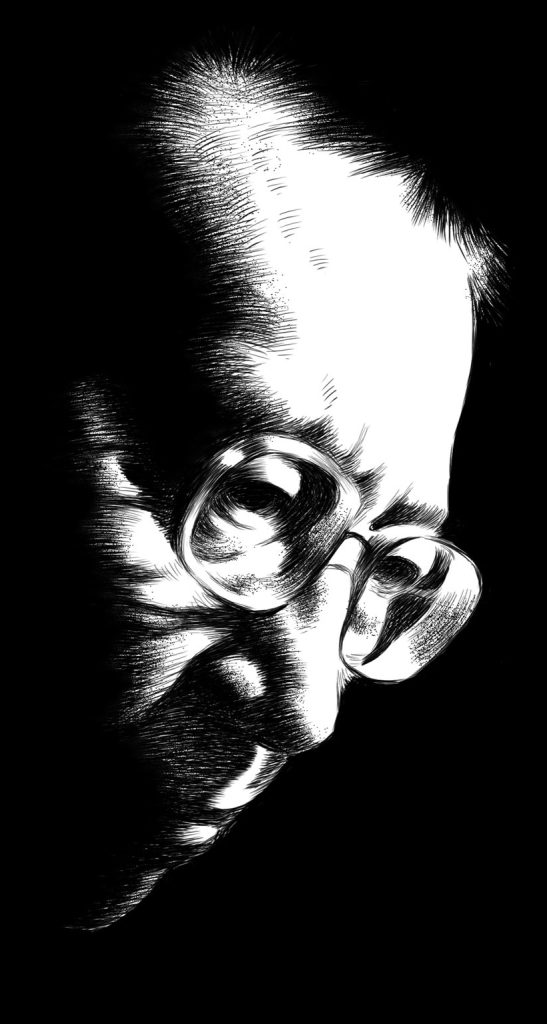
- Cover image: Wikimedia Commons (see file page for license)