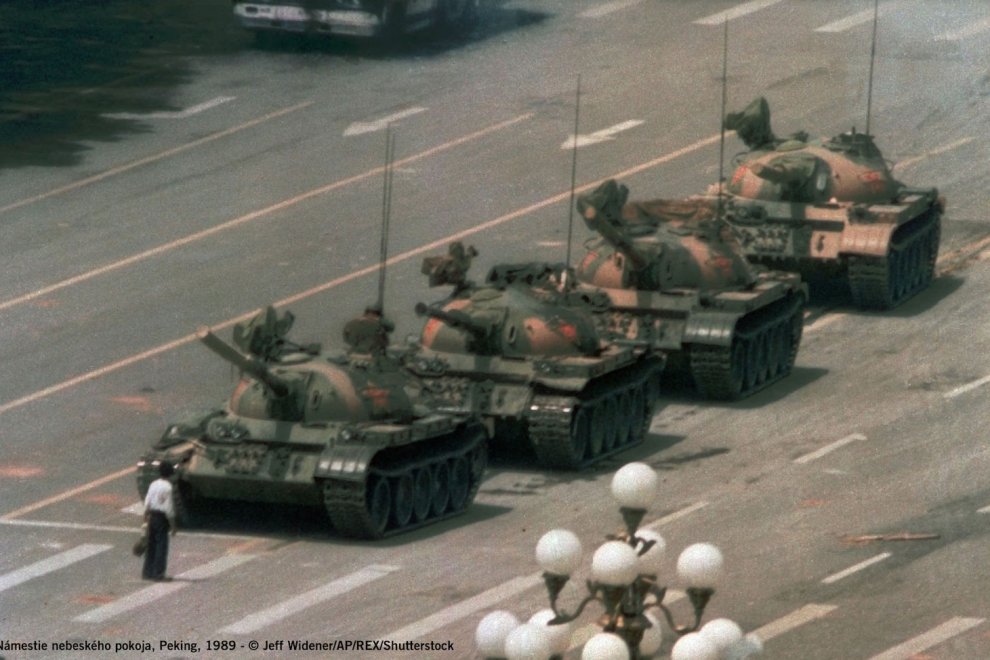
Cover: June 5, 1989, Chang’an Avenue — an unidentified man stands alone before a column of tanks. Photo: Jeff Widener / AP
[Image placeholder] Historic photo of the “Tank Man” on Chang’an Avenue, June 5, 1989 (Photo: Jeff Widener / AP) — the images in the source file are embedded as in-page data and cannot be extracted or uploaded, so a text placeholder is used here.
Overview
Dates: April 15 – June 4, 1989
Place: Tiananmen Square, Beijing; protests spread to some 400 cities nationwide
Peak: About 1 million in the square (May 17, 1989 — the movement’s peak)
Outcome: Cleared by martial-law troops (night of June 3–4, 1989)
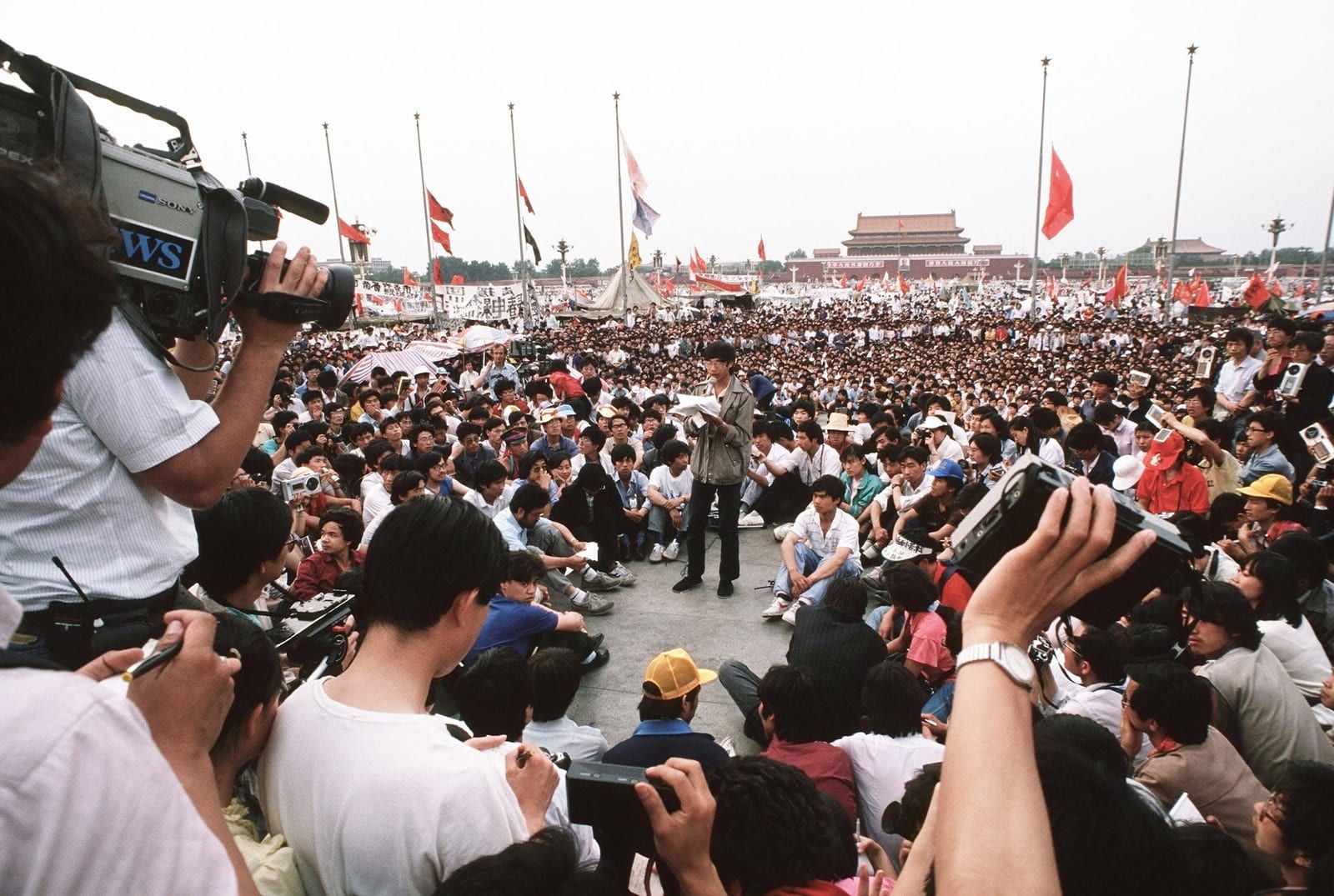
In the spring of 1989, Beijing saw the largest popular protest movement in the history of the People’s Republic of China. Students, workers and ordinary citizens took to the streets demanding action against corruption, a freer press and political reform. The movement lasted nearly fifty days, spread to some 400 cities, and at its height drew about a million people into Tiananmen Square.
After talks failed and a split at the top of the Communist Party became public, the authorities imposed martial law on parts of the capital on May 20. As many as 300,000 troops converged on Beijing, only to be held at the city’s edge for days by human walls of residents. On June 1, the leadership decided to clear the square. On the night of June 3–4, heavily armed troops fought their way toward the centre, opening fire on residents who tried to block them along western Chang’an Avenue, at Muxidi and at Fuxingmen, and occupied Tiananmen Square in the early hours.
The Chinese government has never published a full list of the dead, and the exact toll remains unverifiable to this day. The crackdown ended the political reform era of the 1980s, and its shadow is long: inside mainland China, “June Fourth” remains among the most heavily censored topics in the nation’s history — while around the world, it has never been forgotten.
[Image placeholder] Historic photo of protesters filling Tiananmen Square, May 1989 (at the height of the movement the square filled with students and supporting citizens, recorded by foreign television cameras) — the source image is embedded data and cannot be extracted, so a text placeholder is used here.
Causes: Why People Took to the Streets
The movement did not erupt from nowhere. A decade of reform and opening had produced prosperity and injustice side by side — and in the spring of 1989, the death of a reformist leader lit the fuse.
1. Inflation and the cost of living
In 1988 a rushed attempt at price reform backfired: prices soared, annual inflation hit about 18.8% — the highest since 1949 — and panic buying swept the country. For city residents on fixed wages, watching their savings shrink turned anxiety about reform into anger.
2. Corruption and “official profiteering”
Under the dual-track price system, the same goods had a low state price and a high market price. Officials — and their children — who controlled allocation permits could buy at the state price and resell at the market price for enormous profit. This “official profiteering” (guandao) became the focus of public rage, and anti-corruption the demand that united every group in the streets.
3. Political reform stalls
The economy was loosening while politics stood still: the press was controlled, association restricted, and ordinary people had no voice in public affairs. Intellectuals and students argued that without political reform and the rule of law, corruption could never be rooted out — and the movement’s demands grew from anti-corruption to press freedom and political accountability.
4. The spark: the death of Hu Yaobang
Former party chief Hu Yaobang, a symbol of 1980s reform, had been forced to resign in 1987 for being “too soft on bourgeois liberalisation”. He died on April 15, 1989. Beijing students laid wreaths in his memory and occupied the square — and mourning quickly turned into protest. The movement had begun.
What the students demanded
- Equal, open dialogue with the government
- Punish corruption; publish the assets of officials and their families
- Freedom of the press, of speech and of association
- More funding for education; better treatment of intellectuals
- Rehabilitate Hu Yaobang’s reputation and repudiate the campaign against “bourgeois liberalisation”
Timeline: Fifty Days
April 15 — Hu Yaobang dies
Reformist former general secretary Hu Yaobang dies in Beijing. University students begin laying wreaths; the mourning swiftly turns into protest.
April 17 — Into the square
Students march into Tiananmen Square and present seven demands, including dialogue with the government and freedom of the press.
April 22 — Kneeling for an audience
On the day of Hu’s memorial service, three students kneel for nearly an hour outside the Great Hall of the People, petitioning to be received. No official ever comes out — a scene broadcast nationwide that fuels public outrage.
April 26 — The April 26 editorial
A People’s Daily editorial brands the movement “turmoil” manufactured by “a very small number of people”. Far from intimidating the students, the verdict provokes a much larger backlash.
April 27 — The April 27 march
Hundreds of thousands of students march to demand the editorial be retracted — among the largest demonstrations of the movement — forcing the authorities to agree to talks.
May 13 — The hunger strike
With dialogue going nowhere, students begin a hunger strike in the square. “It is not that we want to die,” their declaration reads, “but that we are forced to do this.” The strike wins nationwide sympathy, and crowds pour into the square day after day.
May 15–16 — Gorbachev’s visit
Soviet leader Mikhail Gorbachev arrives for a historic visit normalising Sino-Soviet relations. Because the square is occupied, the welcoming ceremony planned there has to be moved to the airport.
May 17 — A million march
Around one million Beijing residents — workers, journalists, teachers, even staff from government offices — march in support of the hunger strikers. The movement reaches its peak.
May 19 — Zhao Ziyang’s last appearance
At 4 a.m., General Secretary Zhao Ziyang — who favoured dialogue — comes to the square and tells the students through tears: “Students, we have already grown old; it no longer matters to us.” It is his final public appearance. That evening, Premier Li Peng announces martial law for parts of the capital.
May 20 — Martial law
Martial law takes effect and up to 300,000 troops converge on Beijing. But residents flood the streets, blocking intersections with their bodies and barricades — for days, the army cannot move.
May 30 — The Goddess of Democracy
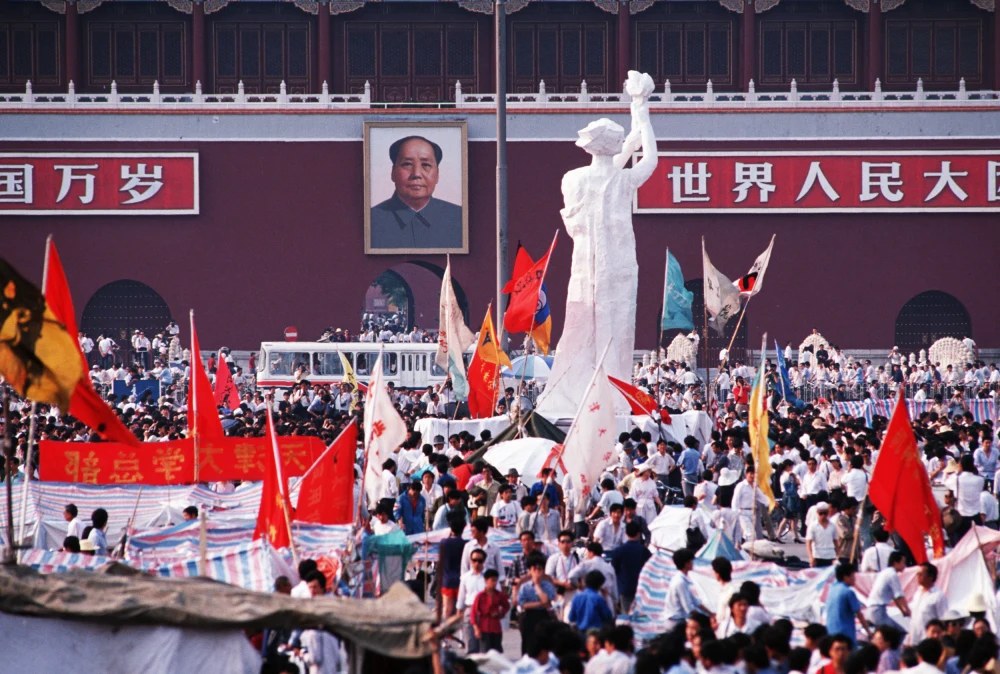
Students of the Central Academy of Fine Arts raise the roughly 10-metre Goddess of Democracy at the north end of the square, facing the portrait above Tiananmen Gate. It becomes the movement’s best-known symbol.
June 1 — The decision to clear
The Party leadership meets and decides to end the occupation by force. Fresh troops brought in from outside the capital have completed their encirclement of the city.
Night of June 3 — The shooting begins
From late evening, troops are ordered to reach the centre at all costs. At Muxidi, along western Chang’an Avenue and at Fuxingmen, they open fire with live ammunition on residents blocking their path, and armoured vehicles crush barricades. Most of the killing happens along this avenue west of the square, not in the square itself. Residents resist with bare hands; many are shot. Enraged crowds also burn military vehicles, and some soldiers are killed.
Early hours, June 4 — The square is cleared
In the early hours, troops occupy Tiananmen Square and a tank topples the Goddess of Democracy. The last few thousand students withdraw from the square’s south-east corner. Nearly fifty days of protest end in bloodshed. Across Beijing, hospital morgues overflow as families search for the missing.
June 5 — The Tank Man
At midday, a lone man carrying shopping bags steps into Chang’an Avenue and stands before a column of tanks. Each time the lead tank tries to steer around him, he moves to block it again. Photographers capture the scene and it circles the world. His name and his fate remain unknown to this day.
June 9 — Deng draws the line
Deng Xiaoping publicly thanks the martial-law troops and labels the movement a “counter-revolutionary rebellion”, saying the storm “was bound to come sooner or later”. Mass arrests and wanted lists follow. Zhao Ziyang is placed under house arrest — he will never be free again, and dies in 2005 still confined.
[Image placeholder] Historic photo of the Goddess of Democracy (raised at the north end of Tiananmen Square on May 30, 1989, torch held high, facing Tiananmen Gate; toppled by a tank during the clearing in the early hours of June 4) — the source image is embedded data and cannot be extracted, so a text placeholder is used here.
Death Toll: A Number Still Without an Answer
How many died? The Chinese government has never published a full toll and has refused any independent investigation. Estimates range from several hundred to ten thousand. The table below sets out the main figures and who gave them — the gap between them is itself a product of archives sealed for more than three decades. In addition to the dead, thousands more were wounded.
| Source | Figure | Note |
|---|---|---|
| Official CCP figure | 241 | Deaths as published by the Chinese government, including soldiers — its only official figure. |
| Chinese Red Cross | 2,600 | The figure first released on June 4, 1989 — later retracted under pressure. |
| Amnesty International | ≈ 1,000 | Estimated from eyewitness and hospital accounts. |
| Modern scholarship | 700 – 2,600 | The range given by Wikipedia’s survey of scholarly studies; independent estimates run from 300 to 2,700. |
| Declassified British cable | ≥ 10,000 | Declassified in 2017. In a secret cable of June 5, 1989, British ambassador Alan Donald wrote: “Minimum estimate of civilian dead 10,000.” His source was relaying information from a close friend who was a member of China’s State Council. The cable also records armoured vehicles repeatedly running over bodies. |
Note: because China’s official archives have never been opened, none of these figures can be independently verified. They are presented side by side, each with its source, without adjudication.
Aftermath: How That Night Shaped Today
Arrests, trials and exile
The clearing was followed by mass arrests: student leaders were placed on wanted lists and large numbers of participants jailed; some workers and residents were sentenced to death for “rioting” and swiftly executed. At the same time, clandestine rescue networks such as Operation Yellowbird smuggled hundreds of dissidents to safety through Hong Kong.
The end of the reformers
Zhao Ziyang was stripped of all posts and held under house arrest for the rest of his life, dying in confinement in 2005. The Party’s political-reform faction was purged, the reform experiments and “New Enlightenment” of the 1980s ended, and Jiang Zemin was elevated to general secretary. Chinese politics entered a long freeze.
International sanctions
The crackdown shocked the world. Western governments condemned it and imposed sanctions, suspending high-level contact and arms sales. The EU arms embargo imposed in 1989 remains in force today — a lasting knot in China–Europe relations.
The bargain: economic opening, political tightening
Reform and opening stalled until Deng Xiaoping’s 1992 southern tour restarted it — on new terms: the economy could open, but politics would tighten. That bargain has shaped the decades since: living standards transformed, while the space for public expression steadily narrowed.
Censorship and enforced forgetting
Inside mainland China, June Fourth is among the most censored topics in the country’s history: textbooks omit it, media may not report it, and online the words “June Fourth”, “Tiananmen”, “candle” — even candle emojis as the date approaches — are blocked. Netizens dodge the filters with code words such as “May 35th” and “eight squared” (8² = 64), which are banned in turn. The result: many young Chinese know nothing of what happened in their own capital.
The Tiananmen Mothers
Relatives of the dead and the maimed formed the Tiananmen Mothers. For more than three decades their demands have never changed: publish the names of the dead, hold those responsible to account, and let us mourn in public. The answer has been surveillance — every year around June, the families are placed under watch, barred from interviews and from gathering at the graves.
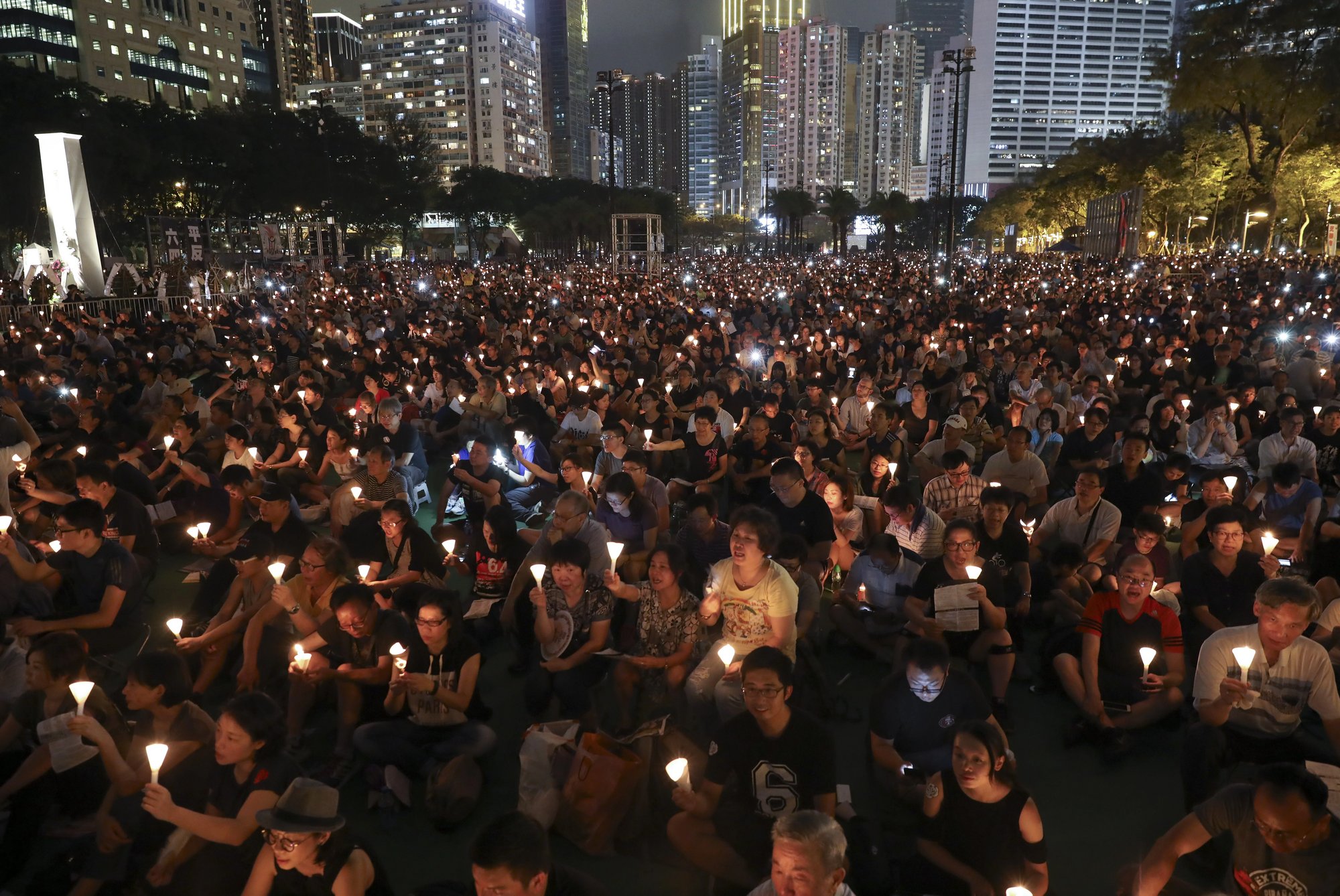
[Image placeholder] Historic photo of the June 4 candlelight vigil in Hong Kong’s Victoria Park — the source image is embedded data and cannot be extracted, so a text placeholder is used here.
Hong Kong: thirty years of candlelight
From 1990 to 2019, every June 4, tens of thousands of Hong Kong residents lit candles in Victoria Park — the only large public commemoration on Chinese soil, held without interruption for thirty years, and drawing record crowds at the 30th anniversary in 2019. From 2020 the authorities banned the vigil, citing the pandemic; in 2021 its organiser, the Hong Kong Alliance, disbanded and its leaders were jailed. Victoria Park has been silent since: each June 4 the park is ringed with police, and anyone who lights a candle risks being stopped and taken away. Remembrance now survives in Taipei, London, New York, Sydney and other cities abroad — and, since 2023, in a June 4th Museum in New York.
A symbol that cannot be erased
The photograph of the Tank Man became one of the most reproduced images of the twentieth century and its most enduring symbol of one person standing against state power. In mainland China it has never been published openly, and many young people there do not recognise it — while elsewhere it appears in textbooks, museums and memorials. The race between forgetting and remembering is still being run.
Why it still matters
June Fourth drew the boundaries of Chinese politics ever since: economic development is permitted and even celebrated, while organised dissent is stopped before it can form. To understand today’s censorship, the stability-maintenance apparatus and the condition of civil society, one has to return to the choices made on that night in 1989. That is why, more than three decades on, the date still cannot be spoken aloud — and still must be remembered.
Sources
This page is compiled from the public sources below; the chronology, crowd figures and death-toll estimates can be checked against them. The photographs are genuine images from 1989 and from later commemorations.
- Wikipedia (Chinese): “June Fourth Incident”
- Wikipedia (English): “1989 Tiananmen Square protests and massacre”
- AFP: “At least 10,000 killed in 1989 Tiananmen crackdown: British cable” (2017)
Recording history, refusing to forget — until the day the truth can be spoken openly.
Photos: The Record