On 23 September 2014, the Intermediate People’s Court of Urumqi handed down its verdict: Ilham Tohti, a Uyghur scholar at Beijing’s Minzu University, was guilty of “separatism.” The sentence was life imprisonment, deprivation of political rights for life, and confiscation of all his personal property. Eight months had passed since his arrest; the trial itself lasted two days. The “crimes” established by the court were his university lectures, the articles published and reposted on the website he founded, Uyghur Online, and things he had said in interviews with foreign media.
Ilham was known, in Xinjiang and abroad, as the archetypal “moderate.” He opposed Xinjiang’s independence and argued for implementing the regional ethnic autonomy that China’s own constitution and laws already promise. He opposed violence, and repeatedly warned Beijing that discrimination and repression would only drive Uyghurs to despair. On the day of the verdict, the White House and Secretary of State John Kerry issued statements demanding his release; the European Union called the sentence “completely unjustified.” Over the following decade, Ilham received the PEN/Barbara Goldsmith Freedom to Write Award, the Martin Ennals Award for Human Rights Defenders, the Council of Europe’s Václav Havel Human Rights Prize and the European Parliament’s Sakharov Prize — while he himself remained in a prison in Urumqi. His family last had word of him in 2017.
Background and Causes
Ilham Tohti was born on 25 October 1969 in Artush, Xinjiang. His father, an ethnic cadre educated by the new People’s Republic, died in 1971 during the Cultural Revolution, when Ilham was two. Ilham studied at Northeast Normal University and then at the graduate school of the Central Nationalities University (now Minzu University of China) in Beijing, where he stayed on to teach. His research concerned income disparities, employment and poverty in Xinjiang; he lectured on subjects including international settlement.
In 2006 he founded Uyghur Online (Uighurbiz), a website in Chinese and Uyghur that published and republished articles on Xinjiang’s social problems. Its stated purpose was plain: to let Han Chinese readers understand the Uyghurs’ situation, and to give the two peoples a channel for dialogue. The site quickly became an important window on Xinjiang — and a thorn in the authorities’ side. It was shut down in mid-2008, accused of links to extremist elements in the diaspora. Ilham himself had been under police surveillance since the 1990s; for a period he was barred from teaching and from publishing through normal channels.
After the deadly violence in Urumqi on 5 July 2009, Xinjiang governor Nur Bekri publicly accused Uyghur Online of spreading rumours and inciting the riots. On 8 July, police took Ilham from his Beijing home; his whereabouts were unknown. Under international pressure — reported to include representations by the Obama administration — he was released on 23 August 2009, but warned not to criticise the government’s handling of the riots again, and he and his family were forbidden to leave Beijing.
In 2011 he published a long essay, “My Ideals and the Career Path I Have Chosen,” setting out his position systematically: he did not support independence; what he wanted was the implementation of the Law on Regional Ethnic Autonomy. “I am an autonomist,” he wrote. “I hope Xinjiang can remain in China in a federal form.” On 28 October 2013, a Uyghur family drove a vehicle into a crowd at Tiananmen Square, killing and injuring bystanders; the authorities labelled it a terrorist attack. Ilham criticised the official tendency to link the entire Uyghur people with violence, and in interviews with foreign media including Voice of America warned that inter-ethnic trust was collapsing. Those words were the last straw.
Course of Events
15 January 2014: the raid. That afternoon, large numbers of police searched Ilham’s Beijing home, seizing computers, mobile phones, passports, teaching materials and students’ coursework, and took him away to Urumqi. His wife, Guzailai Nu’er, and their two young sons remained in Beijing. His daughter, Jewher Ilham, was by then studying at Indiana University in the United States — in February 2013, father and daughter had been stopped and interrogated at Beijing’s airport as they tried to leave together; in the end only Jewher travelled.
February–July 2014: charge and indictment. On 20 February, Urumqi police announced that Ilham had been criminally detained on suspicion of separatism; he was formally arrested soon after. On 26 February, US State Department spokeswoman Jen Psaki called for his release; Foreign Ministry spokeswoman Hua Chunying replied that the judicial authorities would handle the case according to law. For six months his lawyers, Li Fangping and Liu Xiaoyuan, were unable to meet their client or see the case file; Liu withdrew from the defence under pressure. On 30 July, Urumqi prosecutors indicted Ilham, accusing him of colluding with overseas “East Turkestan” forces, using his website to advocate “Xinjiang independence,” using his lectures to incite violence, and “coercing” students into working for the site — in short, of building a “separatist criminal syndicate.”
17–18 September 2014: a two-day trial. The case was heard at the Urumqi Intermediate People’s Court. The prosecution’s main “evidence” was excerpts from his lecture recordings, articles from his website, and his foreign media interviews: in class he had said “do not assume that violent resistance is terrorism”; discussing the April 2013 Bachu incident, he had said of those who “use violence to fight violence — I admire them; they are heroes”; he had also said “even a peaceful person like me might kill, might resist.” Three of his students were paraded in televised “confessions” on state broadcaster CCTV. Ilham denied all the separatism charges in court, insisting he had always opposed independence and advocated autonomy. According to Amnesty International, during his detention he had been ill-treated: shackled for more than twenty days and denied food for ten.
23 September 2014: life. The court found separatism proved: life imprisonment, deprivation of political rights for life, confiscation of all personal property. Lawyer Li Fangping said Ilham had been convicted for exercising his right to freedom of expression, and that the defence would appeal.
21 November 2014: appeal dismissed. The Xinjiang High Court convened inside a detention centre in Urumqi at such short notice that Li Fangping could not attend, and announced that the appeal was rejected and the original sentence upheld. The same month, Ilham’s seven students — editors, translators and administrators of Uyghur Online — were convicted after a secret trial. According to a leaked prisoner list disclosed by Human Rights Watch in 2022, six of the seven received sentences of between three and a half and eight years.
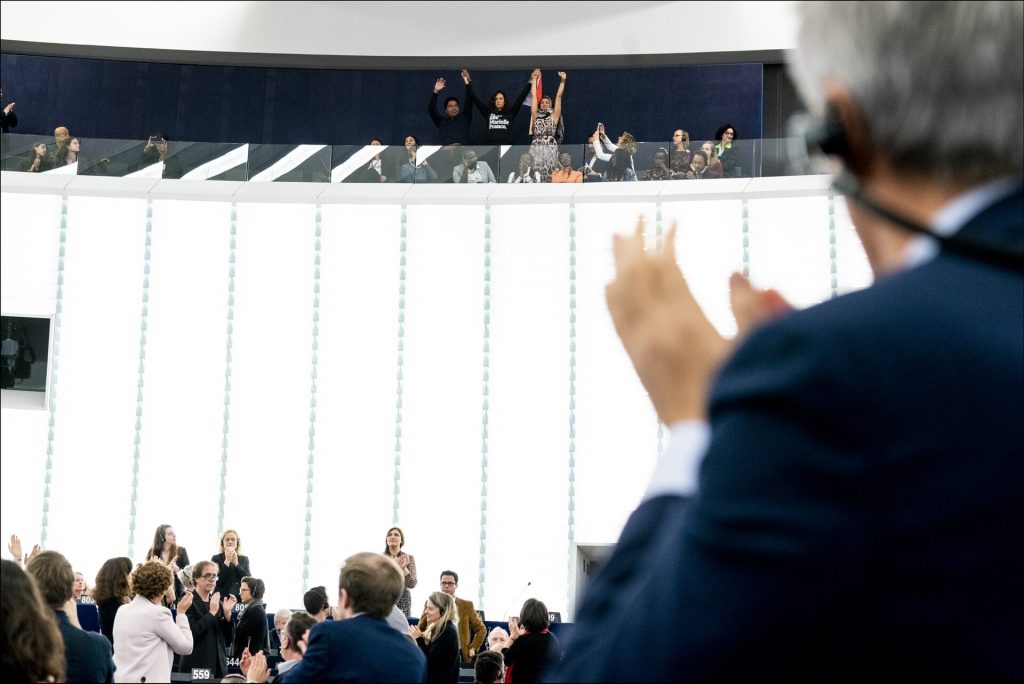
Afterwards: total isolation. Ilham is held at the Xinjiang No. 1 Prison in Urumqi. In February 2016 his wife told Radio Free Asia that the family could visit him only once every three months, for thirty minutes. Accepting the Sakharov Prize in Strasbourg in December 2019, his daughter said: “To be honest, I do not know where my father is. 2017 was the last time my family received word about him.” In 2021, a group of European Union ambassadors’ request to visit him was refused on the grounds that he was a convicted criminal.
Key Figures and Reactions
Ilham himself maintained in court and in his final statement that his aim had always been reconciliation — that Uyghurs might “be Chinese citizens with dignity.” In a 2013 Voice of America interview he said: “I am not going anywhere. The issues facing the Uyghurs are in China, and their resolution is also in China. If I have to be imprisoned, then I will remain in a Chinese prison.” After the verdict, the scholar Wang Lixiong wrote that China had thereby created “a Uyghur Mandela.” The state news agency Xinhua shot back with a commentary arguing that while Mandela preached reconciliation, Ilham preached “hatred and killing.”
The United States and the EU. The White House issued a statement on the day of sentencing calling Ilham “a respected professor” who had long worked to bridge differences between Uyghurs and Han Chinese, and demanded the immediate release of Ilham and his students. Secretary of State Kerry called the sentence “harsh” and called for his release. The EU’s External Action Service called the life sentence “completely unjustified” and demanded his immediate release. Amnesty International named him a prisoner of conscience and the judgment “an affront to justice”; the Committee to Protect Journalists, Human Rights Watch and PEN followed with condemnations.
China’s official response never varied: the Foreign Ministry said Ilham’s “crime is clear, with solid evidence,” that the trial strictly followed the law, and expressed “strong dissatisfaction and firm opposition” to foreign criticism, demanding an end to interference in China’s internal affairs and judicial sovereignty. State media portrayed him as a “separatist ringleader” colluding with overseas forces.
Honours accumulated in his absence. In April 2014 — after his arrest, before his trial — PEN America gave him the Barbara Goldsmith Freedom to Write Award; China’s Foreign Ministry expressed “anger.” In October 2016 he received the Martin Ennals Award, often called the human rights Nobel. In 2017 he received the Weimar Human Rights Prize and Liberal International’s Prize for Freedom. In September 2019 the Council of Europe awarded him the Václav Havel Human Rights Prize; on 24 October 2019 the European Parliament named him the 2019 Sakharov Prize laureate, with President David Sassoli noting that “despite being a voice of moderation and reconciliation, he was sentenced to life in prison following a show trial in 2014.” Every one of these awards was accepted by his daughter or his supporters on his behalf.
Disputed Figures and Accounts
The official narrative: a separatist syndicate leader. In the court’s and state media’s telling, Ilham used his lectures and website as instruments: distorting the causes of violent incidents in Xinjiang and Beijing, inciting ethnic hatred, organising his students into a “separatist criminal syndicate,” and colluding with overseas groups to “internationalise” the Xinjiang issue. In this narrative, the lecture excerpts — “I admire them as heroes,” “I too might kill” — are iron-clad proof of incitement to violence.
The defence and supporters’ narrative: words taken out of context. Ilham and his lawyers argued that the quoted remarks came from academic analysis of the causes of violence: his consistent point was that state violence and discrimination are the wellspring of violence, and that unaddressed grievances would push more people to extremes — the opposite of incitement. He never advocated independence; his published writings and lectures repeated his “autonomist” position. The defence was denied the evidence, denied access to the client, students were made to accuse their teacher on television, and the appeal was staged inside a detention centre without the lawyer present. By this account, the procedure itself proves the trial’s purpose: a warning to others. If the most moderate, most public, most law-abiding voice can be imprisoned for life, no Uyghur should expect to speak through legal channels at all.
What cannot be verified under the information blockade. The fates and sentences of the seven students were never officially published; the figures of three and a half to eight years rest on a list leaked years later. Ilham’s health and exact place of detention are likewise opaque. His wife and young sons in Beijing live under long-term surveillance and rarely speak publicly. In Xinjiang, merely mentioning his name can bring trouble.
Impact and Aftermath
The Ilham case is widely read as the harbinger of Xinjiang’s turn. Three years after his sentencing, from 2017, the region’s vast internment camp system was built, and more than a million Uyghurs and other Muslim minorities were detained in “vocational education and training centres.” It was not only ordinary people who disappeared: Uyghur intellectuals, scholars, writers and businesspeople were swept up in numbers — the anthropologist Rahile Dawut among them, later revealed to have been sentenced to life for “separatism,” in a fate mirroring Ilham’s. In 2021 the US government determined that a genocide was under way in Xinjiang; a 2022 UN human rights office assessment concluded the abuses might constitute crimes against humanity. China denies all such charges as “the lie of the century.”
For Han Chinese readers, the case carries its own bleak symbolism. With Uyghur Online closed, the Chinese-language internet lost its one systematic source on the Uyghurs’ situation. In the decade since, no Uyghur scholar inside the system has publicly discussed ethnic policy. The channels for the “dialogue” Ilham advocated have been blocked one by one; what remains is the official narrative on one side and exiles’ accusations on the other, with no meeting ground between them.
Ilham remains in prison. September 2024 marked ten years since his life sentence; Amnesty International launched a fresh petition for his release, and his name has been put forward by parliamentarians and scholars in several countries for the Nobel Peace Prize. His daughter Jewher’s words at Strasbourg in 2019 are often quoted to sum up the void the case leaves: “I do not know where my father is.” A scholar whose life’s work was how two peoples might understand each other ended up a man whose own whereabouts are a state secret.
Sources
Committee to Protect Journalists, “Uighur Blogger Ilham Tohti Sentenced to Life in Prison on Separatism Charges” (23 September 2014); CPJ/Refworld profile of Ilham Tohti
Amnesty International, “Deplorable Life Sentence for Uighur Academic” (25 September 2014)
Statement by the White House Press Secretary (23 September 2014); Secretary of State John Kerry’s statement (24 September 2014); State Department spokesperson Jen Psaki’s remarks (26 February 2014, via AFP)
European External Action Service statement on the verdict (September 2014); European Parliament Sakharov Prize announcement (24 October 2019) and BBC report of the award ceremony (18 December 2019)
Human Rights Watch, “Timeline of Ilham Tohti’s Case” (15 September 2014); Human Rights Watch reporting on the students’ sentences (2022)
Radio Free Asia reporting on family visits (February 2016)
English and Chinese Wikipedia, “Ilham Tohti,” and the People’s Daily and Xinhua reporting cited therein
Key points of the Urumqi Intermediate People’s Court verdict, as reported by Xinhua and People’s Daily Online (23 September 2014)
(Image source: Wikimedia Commons, photo by the European Parliament, CC BY 2.0 — Jewher Ilham receiving the 2019 Sakharov Prize on her father’s behalf, Strasbourg, December 2019)