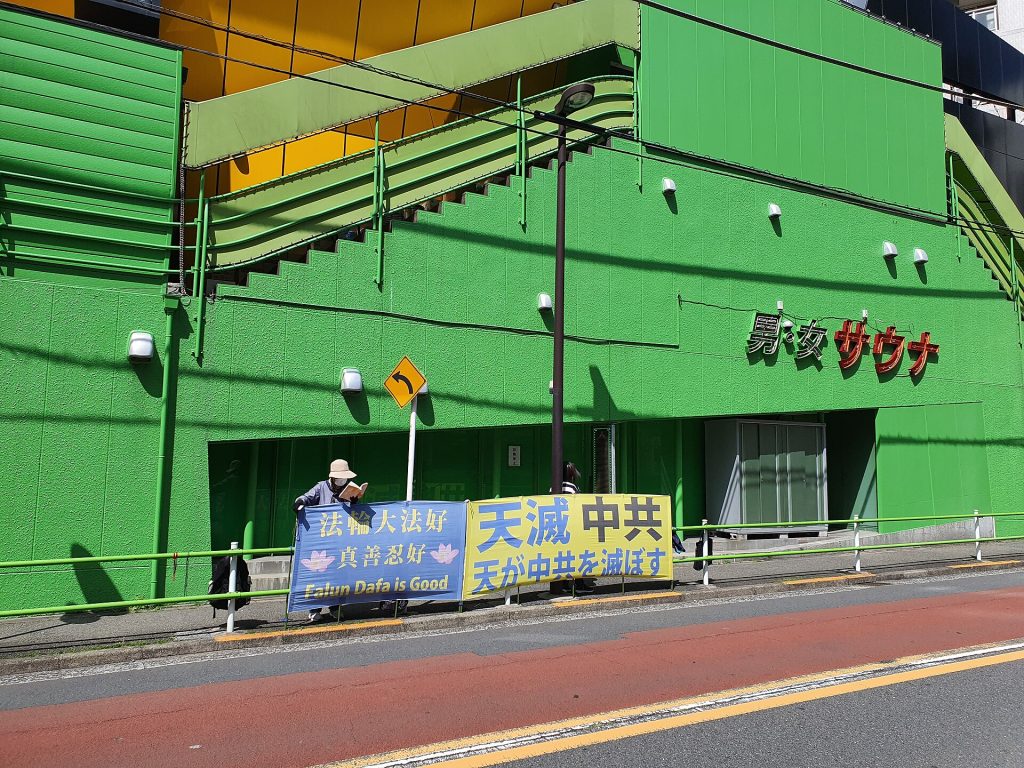
On April 25, 1999, more than 10,000 Falun Gong practitioners stood outside the State Council appeals office beside Zhongnanhai in Beijing, asking for detained fellow practitioners to be released and for a legal environment in which to practice. That day Premier Zhu Rongji met practitioner representatives; the Tianjin detainees were released by nightfall and the crowd dispersed peacefully. Three months later Falun Gong was banned outright, and a suppression campaign mobilizing the entire party-state — one that continues today — began: practitioners were sent in large numbers to labor camps, prisons and “brainwashing” classes; death-toll estimates diverge sharply; and organ-harvesting allegations surfaced in 2006. This article traces the campaign, setting conflicting figures and accounts side by side, with sources.
Background and Causes
Falun Gong, also called Falun Dafa, was first taught publicly by Li Hongzhi on May 13, 1992, in Changchun, Jilin Province, near the end of China’s “qigong boom.” It combines five sets of slow exercises with moral teachings centered on “Truthfulness, Compassion and Forbearance.” In September 1992 it joined the state-run China Qigong Scientific Research Society. Taught free of charge, it grew within years into a mass practice spanning workers, farmers, intellectuals, soldiers and Party officials.
How many practitioners there were has never been settled. Before the ban, Chinese official estimates ran to about 70 million: in April 1999 the Associated Press and The New York Times cited the State Sports Administration for “at least 70 million”; Falun Gong sources claimed 70 to 100 million. After the ban, the official figure abruptly fell to roughly 2 to 3 million. Scholar David A. Palmer estimates a peak of about 10 million; Freedom House estimated 7–20 million still practiced privately in 2017.
Relations cooled from the mid-1990s: Falun Gong withdrew from the state qigong association in 1996, its books were banned, and critical articles appeared in state media. On April 11, 1999, He Zuoxiu, a Chinese Academy of Sciences academician, published “I Do Not Agree with Teenagers Practicing Qigong” in a Tianjin College of Education magazine, singling out Falun Gong. Practitioners who sought a correction at the magazine and city government were dispersed by riot police on April 23–24; 45 were arrested. Told that the arrests were ordered by the Ministry of Public Security and only Beijing could authorize releases, practitioners went to the capital.
Course of Events
April 25, 1999: the Zhongnanhai appeal. Practitioners gathered outside the State Council appeals office at Zhongnanhai’s western gate. Their requests: release the Tianjin detainees, lift the book ban, and allow a legal environment for practice. Premier Zhu Rongji met their representatives and ordered Tianjin to release its detainees; the releases followed that evening. Falun Gong calls this the “April 25 peaceful appeal”; the official framing later became the “besieging of Zhongnanhai.”
April–June 1999: the verdict from the top and a new agency. According to widely cited accounts, Party General Secretary Jiang Zemin wrote to Politburo Standing Committee members that night opposing Zhu’s conciliatory handling, calling the gathering “the most serious political incident since the June 4 political turmoil of 1989.” On June 10, 1999, the Party Central Committee created a “Leading Group for Handling the Falun Gong Issue,” headed by Li Lanqing with Luo Gan among his deputies. Its executive arm, named after its founding date, was the “610 Office” — created without legislation, empowered to mobilize Party, police, courts and propaganda, and the core instrument of the suppression.
July 20, 1999: nationwide arrests. In the early hours of July 20, police across China seized Falun Gong coordinators and leading practitioners from their homes; estimates of those arrested range from several hundred to more than 5,600, none independently verified.
July 22, 1999: the formal ban. The Ministry of Civil Affairs declared the Falun Dafa Research Society and the Falun Gong organization illegal and banned. The Ministry of Public Security the same day issued “six prohibitions” — against displaying Falun Gong insignia, distributing its publications, gathering to practice, or “pleading for Falun Gong” — and regulators banned its books. On July 19 the Party Central Committee had already forbidden Party members to practice. Li Hongzhi, by then in the United States, stated on July 22 “we are not against the government” and appealed for international support.
October 1999: legislated as a “cult.” On October 25, Jiang Zemin told France’s Le Figaro that Falun Gong was an “evil cult” (xiejiao) — the leadership’s first public use of the label. On October 30, the NPC Standing Committee adopted a “Decision on Banning Cult Organizations and Preventing and Punishing Cult Activities” (not naming Falun Gong); practitioners were prosecuted mainly under Article 300 of the Criminal Law. Research Society figures Li Chang and Wang Zhiwen were among those sentenced to 7–18 years at the end of 1999.
2000–2001: Tiananmen protests and the self-immolation. After the ban, practitioners kept coming to Tiananmen Square to unfurl banners and practice, and were seized on the spot. On January 23, 2001, the eve of Chinese New Year, five people set themselves on fire in the square (state media said seven had traveled from Kaifeng, Henan). Liu Chunling died at the scene, her 12-year-old daughter Liu Siying later in hospital; three others were badly burned. The government identified the five as practitioners and built a nationwide propaganda campaign on the event; Falun Gong denied they were practitioners, citing its ban on killing and suicide, and challenged the official footage. Domestic opinion shifted afterward, and “transformation” quotas were widely assigned to local authorities.
The everyday machinery of suppression. For ordinary practitioners, punishment operated mostly outside the courts. First, re-education through labor (laojiao): police could impose up to three years, extendable by a year, without trial, and practitioners long formed a large share — by some estimates cited in the U.S. State Department’s 2008 reports, more than half — of camp inmates. Second, “legal education study classes” (brainwashing centers), where practitioners were held until they signed statements renouncing their faith (“transformation”). Third, prison terms, forced medication in psychiatric hospitals, and loss of jobs and school places. Survivors report beatings, electric shocks, sleep deprivation and force-feeding in custody. Labor was abolished in late 2013, but Amnesty International reported many camps were renamed or repurposed, and detention continued as prison sentences and study classes. After the 2018 institutional reform folded the central 610 Office into the Central Political and Legal Affairs Commission and the Ministry of Public Security, State Department and USCIRF reports still record arrests, sentences and deaths in custody every year.
Key Figures and Reactions
Li Hongzhi, founder of Falun Gong, taught it publicly from 1992 and moved to the United States in the late 1990s. Chinese authorities call him a “cult leader,” accusing him of amassing wealth and misleading followers into refusing medical treatment, and state media in 1999 put deaths among followers at more than 1,500 (disputed by Falun Gong, hard to verify). Jiang Zemin, then Party General Secretary, is widely regarded as the driving force behind the ban; The Washington Post reported in 2001, citing Party sources, that the Politburo Standing Committee had not been unanimous and that “Jiang Zemin alone decided that Falun Gong must be eliminated.” Zhu Rongji, the premier who received them on April 25, was overridden within hours. Luo Gan, the political-legal chief, was the campaign’s chief executor; his successor Zhou Yongkang tightened it again before the 2008 Olympics (Zhou was jailed for life for corruption in 2015; his Falun Gong policies were never charged).
International reactions. The U.S. Congress has passed repeated resolutions condemning the crackdown since 1999, and the State Department has listed China as a “Country of Particular Concern” for religious freedom every year since 1999. The UN Special Rapporteur on torture reported that practitioners accounted for roughly two-thirds of torture allegations he received from China. Human Rights Watch (2002) and Amnesty International (2000) both characterized the campaign as politically driven and accompanied by systematic torture. Overseas practitioners sustain annual April 25 and July 20 rallies and vigils worldwide.
Disputed Figures and Accounts
Practitioner numbers. Pre-ban official and wire-service estimates: ~70 million. Post-ban official figure: 2–3 million. Falun Gong sources: 70–100 million. Scholar David Palmer: a peak of ~10 million. Freedom House (2017): 7–20 million still practicing privately. No independent survey exists.
The nature of April 25. Falun Gong describes a lawful, peaceful appeal, emphasizing the crowd’s discipline and that its requests were met by Zhu Rongji; the official account describes an illegal gathering “besieging Zhongnanhai,” evidence of Falun Gong’s tight organization and political aims. Zhu’s meeting is recorded in Western media and scholarly works; Beijing has never confirmed it.
The Tiananmen self-immolation (January 23, 2001). The official account: the self-immolators were Falun Gong practitioners from Kaifeng, Henan, who set themselves alight in hope of “ascending to heaven,” proving Falun Gong is a harmful cult; CCTV broadcast surveillance footage and survivor interviews a week later, replayed for years. Falun Gong’s denial and challenges: its teachings explicitly prohibit killing and suicide; Washington Post reporter Philip Pan traveled to Kaifeng in February 2001 and neighbors said they had never seen Liu Chunling and her daughter practice Falun Gong; and frame-by-frame analyses alleged anomalies — Liu appearing to be struck by a heavy object, discrepancies in Wang Jindong’s posture and clothing burns — concluding it was staged. Human Rights Watch noted the victims were accessible only to state media; foreign journalists and even family members were barred. Some scholars offer a third possibility: marginal or poorly instructed adherents acting without the movement’s sanction. Because the key evidence has never been opened to independent examination, this column records the incident as a disputed event with no independent determination.
Deaths from persecution. Minghui.org, the Falun Gong-affiliated clearinghouse, compiles a name-by-name list of practitioners documented to have died as a result of the persecution: 5,069 as of May 2024 and 5,302 by the end of 2025. Supporters argue information control means the true toll is far higher; the limitation is that cases come through Falun Gong channels and cannot be verified one by one. Amnesty International, the U.S. State Department and Human Rights Watch have confirmed large numbers of deaths from torture in custody without issuing independent totals. Chinese officials typically deny torture and attribute deaths to illness, suicide, or refusal of treatment during hunger strikes. Deaths attributed to the organ-harvesting allegations below are not included in the Minghui list.
The forced organ harvesting allegations. The gravest and least verifiable dispute, set out in sequence. Note first: no international court has judged these allegations, China has never permitted independent on-site verification, and the core evidence is statistical inference, witness testimony and undercover calls.
The accusers’ case developed as follows. In March 2006, the Falun Gong-affiliated Epoch Times, citing two anonymous witnesses, reported a facility at Sujiatun in Shenyang held practitioners and harvested their organs. That year, former Canadian Secretary of State David Kilgour and lawyer David Matas, commissioned by a Falun Gong-affiliated coalition, published their report (July 2006; revised 2007; expanded into the 2009 book Bloody Harvest), concluding that “there has been and continues today to be large-scale organ seizures from unwilling Falun Gong practitioners,” and calculating that the source of 41,500 transplants performed in 2000–2005 was unexplained. Their evidence included undercover calls in which hospital and detention staff said Falun Gong organs could be supplied; unusually short waiting times (weeks, versus years elsewhere); testimony that detained practitioners were singled out for blood tests; and the growth of transplants after 1999, when China had virtually no voluntary donation system. Journalist Ethan Gutmann’s The Slaughter (2014) estimated some 65,000 practitioners were killed for their organs in 2000–2008 — his own estimate. A June 2016 update by the three, from public data on 712 transplant hospitals, estimated China actually performed 60,000 to 100,000 transplants a year — far above the official ~10,000 — attributing the gap mainly to prisoners of conscience. In 2019 the “China Tribunal” — a people’s tribunal initiated by the advocacy group ETAC and chaired by Sir Geoffrey Nice (the Milošević prosecutor at The Hague) — issued its final judgment (short form June 2019; full judgment March 2020): it concluded unanimously and “beyond reasonable doubt” that forced organ harvesting from prisoners of conscience had been practiced in China on a significant scale for years, that Falun Gong practitioners were “probably the main source,” and that the acts amounted to crimes against humanity. The Tribunal is privately convened, without judicial authority — an investigative finding, not a court verdict; Beijing refused to participate and dismissed it as a political tool.
Legislative responses used weaker language, and the levels should be distinguished. The European Parliament’s December 2013 resolution expressed deep concern at “persistent and credible reports” and called on China to stop and allow an international investigation; U.S. House Resolution 343 (June 2016) likewise rested on “persistent and credible reports of systematic, state-sanctioned organ harvesting from non-consenting prisoners of conscience,” the European Parliament’s Written Declaration 48/2016 restated that position. These are political resolutions, not fact-finding judgments. The UN Committee Against Torture asked China in 2008 to explain transplant organ sources; UN special rapporteurs issued a joint statement of concern in 2021. Freedom House (2017) found “credible evidence” practitioners have been killed for their organs on a large scale since the early 2000s. The common level of these statements is “serious concern / credible allegations,” not “independently verified.”
The Chinese government’s position, and third-party skepticism, are as follows. Beijing has denied forced harvesting from Falun Gong practitioners since 2006, calling the Kilgour–Matas report “based on rumors and false allegations.” China acknowledges executed prisoners were historically the main organ source, but says the 2007 transplant regulation regularized the system, and in December 2014 Huang Jiefu, chairman of the China Organ Donation and Transplantation Commission, announced that from January 1, 2015 executed-prisoner organs would no longer be used, making voluntary citizen donation the only legal source. Huang calls the allegations “nonsense,” arguing China’s transplants are ~8.5% of the world total and its anti-rejection drug consumption ~8% — a match he says refutes the 60,000–100,000 estimate. Third-party skepticism includes a 2006 U.S. Congressional Research Service assessment noting U.S. officials could not corroborate the Sujiatun claims at the hospital in question and questioning the candor of the telephone respondents the Kilgour–Matas report relied on; a 2017 Washington Post investigation, citing Quintiles IMS pharmaceutical data, found China’s immunosuppressant consumption roughly in line with its officially reported transplant volume, calling a clandestine system of tens of thousands of transplants a year, invisible in drug data, “unthinkable”, and quoted a lawyer for hundreds of practitioners as saying he had never heard of organ harvesting — the investigators replied that drug prices and statistical methods make such data an unreliable proxy for transplant volume. The transplant establishment is divided: The Transplantation Society condemns prisoner-organ use while favoring engagement; others advocate boycotts. A 2019 study in BMC Medical Ethics (Robertson et al.) found China’s official donation data follow a pattern suggestive of formula-generated figures — cited by accusers as evidence of fabrication.
In sum: the allegations are long-standing; the evidence is chiefly statistical inference, witness testimony and undercover calls; they are backed by parliamentary resolutions and one privately convened tribunal, but never independently verified on site or judged by an international court; China denies them wholesale, pointing to its donation reform and the drug-data correspondence; and scholars remain divided over the key figures. Presenting them either as proven fact or as pure fabrication would misrepresent the evidence.
Impact and Aftermath
Inside China, the campaign drove millions underground: public practice sites vanished, and Falun Gong survived in family-based and online forms. It also forged a repression toolkit — an extralegal agency, “transformation” quotas, study classes, collective responsibility — that researchers say was later replicated at scale in Xinjiang. The “evil cult” label remains the default frame in mainland discussion; for many families, persecution has meant decades of separation, job loss and stigma.
Abroad, the suppression generated more than two decades of protest and commemoration: every April 25 and July 20, practitioners rally, march and hold candlelight vigils in cities worldwide. The organ allegations prompted legislation in Israel, Spain, Italy, Canada, the United States and elsewhere restricting “transplant tourism” to countries with opaque organ sources.
There is no sign of when the campaign will end. Falun Gong remains on China’s official list of banned “cults,” and new arrests and sentences continue to appear in the latest State Department and USCIRF annual reports. Begun in the summer of 1999, it is one of the longest-running political suppressions in contemporary China; recording its timeline and unresolved disputes is why this column exists.
Sources
Wikipedia (English): “Falun Gong,” “Persecution of Falun Gong,” “2001 Tiananmen Square self-immolation incident,” “Kilgour–Matas report,” “Forced organ harvesting from Falun Gong practitioners in China”
Ministry of Civil Affairs ban decision; Ministry of Public Security circular (July 22, 1999); NPC Standing Committee Decision on Banning Cult Organizations (October 30, 1999)
Amnesty International reports (2000, 2013); Human Rights Watch, Dangerous Meditation (2002)
Kilgour & Matas, Bloody Harvest (2006; rev. 2007; book 2009); Kilgour, Gutmann & Matas, Bloody Harvest / The Slaughter: An Update (2016)
China Tribunal, Final Judgment (2019 short form; 2020 full judgment, chinatribunal.com)
U.S. House Resolution 343 (2016); European Parliament resolution (2013) and Written Declaration 48/2016
U.S. State Department and CECC reports; Congressional Research Service assessment (2006); Freedom House (2017)
The Washington Post: Philip Pan’s Kaifeng investigation (2001); transplant-volume and immunosuppressant-data reporting (2017) and the investigators’ response
Robertson et al., BMC Medical Ethics (2019); Minghui.org list of practitioners persecuted to death; Falun Dafa Information Center 25th-anniversary report (2024)
(Image source: Wikimedia Commons, by Syced, licensed under CC0 1.0 Universal Public Domain Dedication)