On 27 February 2009, a young monk from Kirti Monastery in Ngaba County, Sichuan, set himself on fire on a street in the county town — the first recorded self-immolation protest by a Tibetan inside China against Communist Party rule. Over the following decade and more, self-immolation spread across the Tibetan areas of Sichuan, Qinghai and Gansu and into the Tibet Autonomous Region. According to the International Campaign for Tibet (ICT), whose fact sheet was updated in July 2026, 159 Tibetans have self-immolated inside Tibet and China since 2009, of whom 127 are known to have died; a further 11 have self-immolated in exile, bringing the known total to more than 170. The self-immolators included monks and nuns, but also herders, farmers, students, teachers and parents. The oldest was 81; the youngest just 15. Most of them, in flames or in written testaments, voiced the same two demands: “Let the Dalai Lama come home” and “Freedom for Tibet.” The Chinese government has never published statistics of its own. It attributes every case to “instigation by the Dalai clique,” and since late 2012 it has prosecuted alleged inciters of self-immolation for “intentional homicide,” while punishing immolators’ families, villages and monasteries collectively. This article draws on the public records of ICT, the Central Tibetan Administration (the Tibetan government-in-exile), Radio Free Asia, Human Rights Watch, Amnesty International, the UN human rights office and U.S. congressional bodies.
Background and Causes
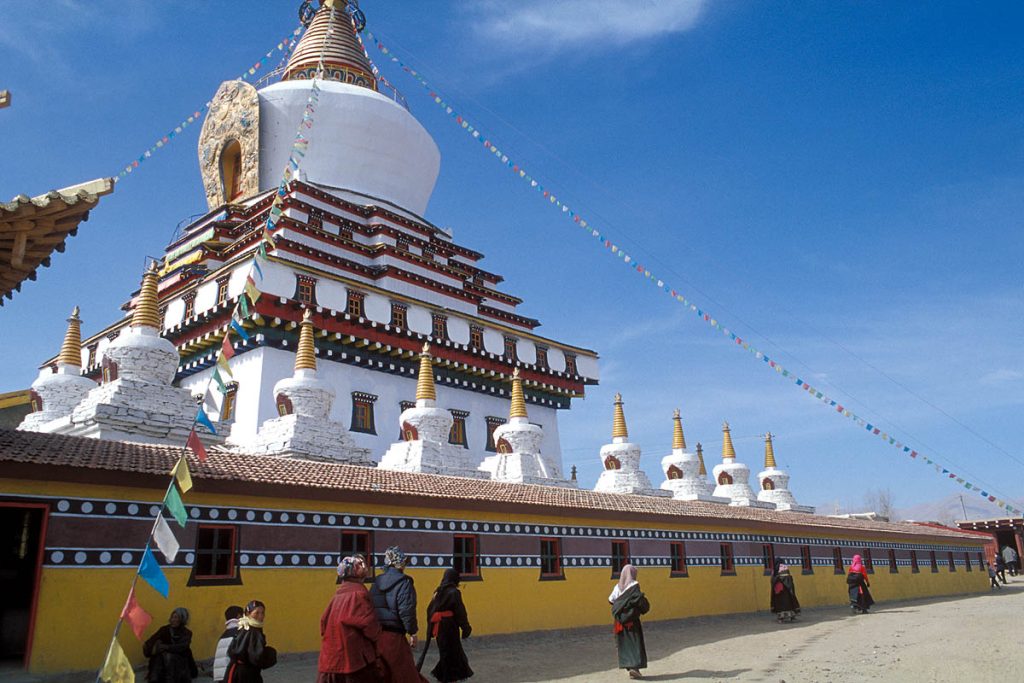
To understand the wave, one must return to 2008. In March 2008 unrest erupted in Lhasa and protests spread across the Tibetan plateau, only to be put down by armed police and troops. Exile organisations and rights groups reported large numbers of Tibetans killed, arrested or disappeared; Beijing said rioters had killed innocent civilians and blamed the “Dalai clique.” In Ngaba (part of the Amdo region in Tibetan), security forces opened fire on protesters led by Kirti monks on 16 March 2008; ICT and other groups recorded at least ten Tibetans shot dead. Kirti Monastery, a major Gelug institution highly influential across Amdo, was thereafter held under siege-like conditions: troops stationed around it, monks subjected to compulsory “patriotic education,” and religious life tightly restricted.
From 2007 onward Beijing had also issued regulations tightening state control over religion, including measures governing the recognition of reincarnate lamas, so that nearly every aspect of Tibetan religious life required state approval. During Tibetan New Year in 2009, the Ngaba authorities cancelled a Kirti prayer ceremony held in memory of those killed in 2008. That cancellation was the immediate trigger of the first self-immolation.
At a deeper level, the testaments and slogans left behind point to long-standing grievances: restrictions on religious freedom, the ban on images of the Dalai Lama, the marginalisation of Tibetan-language education, herder resettlement, work teams and surveillance cameras in monasteries, and “patriotic education” sessions forcing monks and nuns to denounce the Dalai Lama. The Tibetan writer Tsering Woeser and other chroniclers have argued that when marches, petitions and leaflets were all punished as “inciting separatism,” some Tibetans came to see self-immolation as a last resort — a way of being heard that harmed no one but themselves. Tibetan Buddhist teaching does not encourage suicide, and neither the Dalai Lama nor the exile administration ever called for self-immolation. The wave emerged from an environment of intense repression, information blockade and the perceived absence of any other outlet — the common assessment of ICT, the UN High Commissioner for Human Rights and many Tibet scholars.
Course of Events
27 February 2009 — the first case: Tapey. On the third day of Tibetan New Year, Kirti monk Tapey walked onto Qiatangdong Street in Ngaba town — a street local Tibetans later called “Heroes’ Road” — carrying a home-made Tibetan snow-lion flag and a photograph of the Dalai Lama, and set fire to his petrol-soaked body. According to ICT and eyewitness accounts relayed by exiled monks, police shot him while he was in flames, then extinguished the fire and took him away; Xinhua acknowledged the self-immolation but denied police had shot him. Sources disagree on his age (20, 24 and 27 all appear). After he was taken away, his whereabouts were unknown for years and his family was long denied visits; no full official account of his fate has ever been made public. In 1998 the exile Tibetan Thupten Ngodup had died after setting himself on fire during a hunger strike in Delhi, regarded as the first such protest in exile — but the wave inside Tibet is universally dated from Tapey.
16 March 2011 — the death of Phuntsog and the Kirti crisis. Phuntsog (Lobsang Phuntsog), a Kirti monk aged about 20, set himself on fire on the same street on the third anniversary of the 2008 Ngaba protest, shouting “May His Holiness the Dalai Lama live for ten thousand years.” According to ICT and Amnesty International, police beat him as they extinguished the flames; Kirti monks carried him back to the monastery, and he died in hospital in the early hours of 17 March. Hundreds of armed police were then posted to Kirti and the monastery was blockaded; in April 2011 some 300 monks were driven away in trucks to undisclosed locations for “legal education,” and two elderly Tibetans who tried to block the convoy were beaten to death, according to ICT. In August 2011 a court sentenced three monks to 10 to 13 years for “intentional homicide,” on the official theory that they had “hidden” Phuntsog and delayed his treatment; rights groups countered that the monks had rescued him from police who were beating him. In September 2011 Phuntsog’s younger brother, Lobsang Kelsang, set himself on fire together with another monk and died — two brothers lost to the same form of protest.
Late 2011 to 2012 — spread and peak. After Phuntsog, the burnings never stopped. The U.S. Congressional-Executive Commission on China (CECC) counted 12 cases in 2011. On 17 October 2011, Tenzin Wangmo, a 20-year-old nun, died by self-immolation in Ngaba — the first woman to do so. The social profile then shifted: the first dozen or so cases had almost all involved current or expelled Kirti monks, but from December 2011 laypeople began to join, and by late 2012 they formed the majority. The protests spread from Ngaba to Kardze in Sichuan, Yushu and Malho in Qinghai and Kanlho in Gansu; on 27 May 2012 two men set themselves on fire in front of the Jokhang Temple in Lhasa, the first such protest in the capital in years.
The year 2012 was the undisputed peak, though tallies differ by source: the CECC counted 81 self-immolations in 2012 driven by political and religious grievances (plus two property-related cases); Freedom House’s Freedom in the World 2013 recorded 84; some datasets reach 85 or more (see the disputes section below). By any count, November 2012 was the deadliest month: 28 people self-immolated in that month alone, several during the 18th Party Congress in Beijing (8–14 November), widely interpreted by Tibet scholars as an appeal to the incoming leadership. On 7 November 2012, three teenage monks of Ngoshul Monastery in Ngaba — Dorjee, 15, Samdup, 16, and Dorjee Kyab, 16 — set themselves on fire together outside a police station; Dorjee died at the scene. They remain the youngest self-immolators of the wave. The same day, Tamdin Tso, a 23-year-old mother in Rebkong, Qinghai, burned herself to death, leaving a five-year-old son.
The mothers. On 4 March 2012, Rinchen, a mother of young children (Radio Free Asia said three; Free Tibet said four), burned herself to death near Kirti Monastery. On 30 May 2012, Rikyo, 36, a mother of three, died on the spot in front of the Jonang monastery in Dzamthang; her testament urged Tibetans to stay united and study Tibetan culture so as to bring the Dalai Lama home, and added: “Do not resist by fighting if I fall into Chinese hands alive.” In May 2013, Kalkyi, 30, a mother of four, burned herself to death in Dzamthang. ICT’s list records 28 women among the 159 who self-immolated inside Tibet and China.
After 2013 — fewer, but never zero. The pace fell to roughly 26 cases in 2013 and about 11 in 2014, and thereafter to a handful each year. Analysts cite criminalisation and collective punishment, a tighter information blockade, the mounting cost borne by families and communities, and repeated appeals by exile leaders to value life. Cases also surfaced years late: the 2015 self-immolation of Shurmo, 26, in the Tibet Autonomous Region was only disclosed by the Central Tibetan Administration in 2021 — a reminder that every tally is a floor, not a ceiling. The most recent known cases inside Tibet occurred in 2022: on 25 February, the popular 25-year-old singer Tsewang Norbu set himself on fire in front of the Potala Palace in Lhasa and died; on 27 March, Taphun, 81, self-immolated outside the police station by Kirti Monastery in Ngaba and is believed to have died — the oldest person on the list. In exile, ICT separately records 11 cases, including Dorjee Tsering, a 16-year-old student who burned himself in Dehradun, India, on 29 February 2016 and died in a Delhi hospital.
Key Figures and Reactions
The self-immolators as a group. ICT’s list (updated 3 July 2026) records, among the 159 inside Tibet and China, 131 men and 28 women; 26 were aged 18 or under; 25 were current or former monks of Kirti Monastery. Their demands, as summarised by ICT and years of Radio Free Asia reporting, converged on two points: the return of the 14th Dalai Lama to Tibet, and freedom and human rights for Tibetans. Many left notes, recordings or shouted slogans; students also protested the erosion of Tibetan-language schooling and herders resisted resettlement and mining, so motives were not monolithic — but “let the Dalai Lama return” was the single most common cry.
The 14th Dalai Lama. His position was consistently cautious. According to Reuters, in March 2012 he said he did not encourage the protests, while praising the courage of those who had self-immolated and blaming the burnings on China’s repressive policies and “cultural genocide.” In July 2012 he explained his neutrality to India’s The Hindu: if he said something positive, Beijing would blame him; if something negative, the families of the dead would be devastated. In June 2013, in Australia, he called the acts sad and of doubtful effect, and urged Beijing to examine their underlying causes. The Central Tibetan Administration struck a similar balance: it held prayer services for the dead while repeatedly and publicly appealing to Tibetans inside Tibet not to self-immolate. Beijing accused the “Dalai clique” of paying and remotely directing the immolators; the Dalai Lama and the exile administration denied this, and no independent investigation has ever substantiated the claim.
The Chinese authorities. Official rhetoric moved from denial and downplaying to branding the protests “separatist and terrorist acts,” describing immolators as criminals or dupes of overseas forces. The practical response combined saturation policing, communications blackouts, bans on foreign journalists, seizure of bodies and enforced secret cremations, bans on public mourning, collective punishment (see below), and judicial criminalisation. In December 2012 the Supreme People’s Court, the Supreme People’s Procuratorate and the Ministry of Public Security jointly issued an Opinion on Handling Self-Immolation Cases in Tibetan Areas in Accordance with the Law, providing that anyone who organises, plots, incites, coerces, entices, abets or assists another’s self-immolation is to be held criminally liable for intentional homicide; even a self-immolator whose act “causes major harm” could be prosecuted.
Sentenced for “intentional homicide.” The most scrutinised case was that of Kirti monk Lorang Konchok and his nephew Lorang Tsering, detained in August 2012 and accused of acting on instructions from “the Dalai clique” to incite eight people to self-immolate, three of whom died. On 31 January 2013 the Ngaba (Aba) Intermediate People’s Court sentenced Lorang Konchok to death with a two-year reprieve for intentional homicide — later commuted to life imprisonment in accordance with Chinese law — and Lorang Tsering to ten years. Human Rights Watch noted that the verdict rested almost entirely on confessions obtained during five months in detention and questioned the trial’s fairness. Other such convictions included the three monks in the Phuntsog case in 2011 and six Tibetans sentenced by a Gansu court in January 2013 over the death of Dorje Rinchen. Rights groups have documented hundreds more detained or sentenced for photographing immolators, sending news abroad or attending mourning ceremonies.
The international community. On 2 November 2012, UN High Commissioner for Human Rights Navi Pillay urged China to “promptly address the longstanding grievances” behind the alarming escalation of desperate protests, expressed disturbance at reports of detentions, disappearances, excessive force and curbs on cultural rights, called for the release of those detained merely for exercising rights to expression and assembly, and asked Beijing to admit independent monitors and media — while also appealing to Tibetans to refrain from self-immolation. On 5 December 2012, U.S. Special Coordinator for Tibetan Issues Maria Otero expressed deep concern, listed the policies fuelling tensions — controls on religious practice, language-undermining education, intensive surveillance, arbitrary detention — and called on Beijing to enter dialogue with the Dalai Lama or his representatives without preconditions and to allow journalists and observers unrestricted access. The European Parliament likewise passed repeated resolutions condemning the crackdown and calling for dialogue. China’s Foreign Ministry replied in every instance that Tibet affairs are a purely internal matter, rejected foreign “interference,” and maintained that Tibetans enjoy religious freedom and improving livelihoods.
Disputed Figures and Accounts
How many in total? Because Tibetan areas have long been closed to foreign journalists and independent investigators, and every case had to be smuggled out at personal risk, the statistics are necessarily incomplete and sources differ in scope and cut-off date. ICT’s fact sheet — the most widely cited list — records, as updated on 3 July 2026, 159 self-immolations inside Tibet and China, of whom 127 are known to have died, plus 11 in exile, for a known total of over 170. The Central Tibetan Administration’s figures are close: its 2025 commemoration of Tapey spoke of at least 157 documented cases inside Tibet, the latest being Taphun in 2022. Figures for earlier moments are often mixed together: after Yonten’s self-immolation in November 2019 the exile administration put the cumulative figure at 154; media reports in 2016 cited around 144 from ICT. These discrepancies reflect different cut-off dates rather than fundamental disagreement. Given the information blockade, the true number can only be higher, not lower, than the documented lists — the Shurmo case, hidden for more than five years, proves the point. China has never published statistics of its own, nor permitted independent verification, so there is no official figure against which ICT’s list can be checked.
The 2012 discrepancy. For the peak year, the CECC counted 81 politically and religiously motivated cases (with two additional property-related cases), Freedom House counted 84, and some datasets reach 85–87. The differences turn on case-inclusion criteria: whether to count mixed-motive cases, single-source reports, and cases confirmed only in the following year. This article therefore presents the figures side by side rather than treating any single number as definitive.
Disputed details. Many particulars remain contested: Tapey’s age (20, 24 or 27) and whether police shot him (eyewitnesses said yes, Xinhua said no); Phuntsog’s age (20 or 21) and the circumstances of his death (officials said monks hid him and delayed treatment; rights groups said police beat him first and monks rescued him); and individual motives — Xinhua attributed the March 2012 self-immolation of student Tsering Kyi in Maqu, Gansu, to academic pressure and an old head injury, while Free Tibet, citing her own earlier remarks, described it as a protest. Where details are disputed, this article attributes each version to its source.
The deepest dispute: characterisation. Beijing defines the burnings as separatist and terrorist acts plotted by the “Dalai clique,” and on that basis prosecutes and collectively punishes. The exile administration, ICT and most human rights organisations maintain that the self-immolations were spontaneous acts of individuals in despair, rooted in religious and cultural repression, and that no public, independent evidence supports Beijing’s charge. Within Buddhist ethics, too, there is debate over whether self-immolation violates the precept against taking life; the Dalai Lama himself called it “a very, very delicate political issue” and declined to praise or condemn. One fact, however, is hard to dispute: during the densest years, 2011–2013, there was no channel inside Tibet for publicly discussing these deaths at all. Bodies and testaments were largely under official control, and families often could not even hold a public funeral.
Impact and Aftermath
Criminalisation and collective punishment became routine. On 14 November 2012, officials in Malho (Huangnan) Prefecture, Qinghai, ordered that all public-benefit payments to self-immolators’ households be cancelled, that state-funded projects in their villages be halted, and that anyone who condoled with or donated to bereaved families also be punished — a policy Human Rights Watch characterised as collective punishment. In April 2013, Dzoege (Ruo’ergai) County in Sichuan issued 16 rules: an immolator’s family would lose welfare benefits for three years, be barred from business licences and loans, see close relatives excluded from public posts, and be forbidden to travel to Lhasa or abroad; monasteries involved faced fines and possible closure. Collective punishment meant every would-be immolator had to weigh the fate of their entire family and village — a factor many rights organisations credit for the sharp decline after 2013. But a decline in visible protest is not the disappearance of grievance; it may only mean the cost of expressing it was shifted onto whole communities.
A lasting escalation of control. After the wave, grid-style management, cadres stationed in monasteries, blanket camera surveillance and communications censorship across Tibetan areas all intensified. In 2024 Kirti’s monastic school was shut down altogether and its underage novice monks transferred to government boarding schools, according to Radio Free Asia. Self-immolation as a form of protest declined markedly and international attention faded with it, yet the underlying stand-offs — over Tibetan-language education, monastery control and the Dalai Lama’s succession — did not ease. The 2022 self-immolations of Tsewang Norbu and Taphun were a reminder that the despair had not vanished.
Memory and commemoration. In exile, the self-immolators are honoured as pawo — heroes. Their portraits are displayed at memorials in Dharamshala and elsewhere, the Central Tibetan Administration holds annual prayer services, and writers such as Tsering Woeser continue to document each life. Inside Tibet, their names cannot be spoken publicly. This site records their story so that the people behind the statistics — a 20-year-old monk, a 36-year-old mother, a 15-year-old schoolboy, an 81-year-old elder — are not forgotten. The question they raised in the most terrible way imaginable — whether Tibetans may keep their religion, their language and their dignity — remains unanswered.
Sources
International Campaign for Tibet (ICT): Self-Immolation Fact Sheet (updated 3 July 2026: 159 inside Tibet and China, 11 in exile, with breakdowns); ICT reporting on Tapey (2009), Phuntsog and the Kirti crackdown (2011), and the death sentence on Lorang Konchok (2013)
Central Tibetan Administration (CTA, tibet.net): commemoration of Tapey and the count of at least 157 documented cases inside Tibet (2025); Rikyo’s testament (2012); disclosure of the Shurmo case (2021)
U.S. Congressional-Executive Commission on China (CECC): 2012 statistics (81 political/religious cases) and analysis of the Dzoege County collective-punishment rules
Freedom House: Freedom in the World 2013 — Tibet (84 cases in 2012)
Office of the UN High Commissioner for Human Rights: statement by Navi Pillay, 2 November 2012
U.S. Department of State: statement by Special Coordinator for Tibetan Issues Maria Otero, 5 December 2012, and daily press briefing records
Human Rights Watch: “China: Stop Sentencing Tibetans for ‘Inciting’ Immolations” (1 February 2013); “China: Tibetan Immolations, Security Measures Escalate” (29 November 2012)
Amnesty International: Urgent Action on Tibetans detained after Phuntsog’s death (UA 118/11, April 2011)
Radio Free Asia: case reporting on Rinchen, Kalkyi, Tsewang Norbu and others, and on the 16 Dzoege rules
Tibetan Centre for Human Rights and Democracy (TCHRD): Iron Hare 2011: Flames of Resistance (2012) and reporting on the Dzoege document
Reuters: the Dalai Lama’s statements on self-immolation (March 2012; June 2013); The Hindu, interview with the Dalai Lama (July 2012)
Xinhua News Agency: official accounts denying police shot Tapey, on the Tsering Kyi case, and on the Lorang Konchok case (the Chinese government’s version)
(Image source: Wikimedia Commons, the great stupa of Kirti Monastery, by Jialiang Gao, licensed CC BY-SA 3.0)