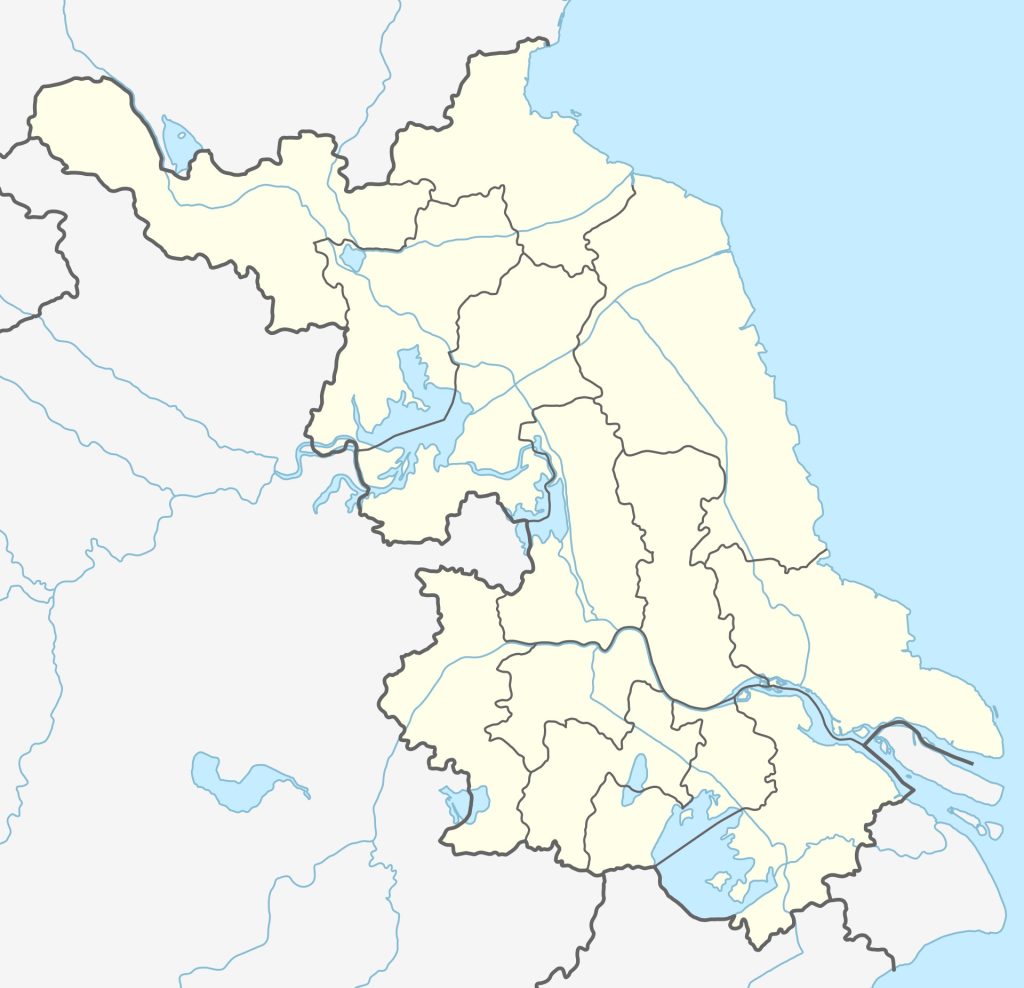
On the evening of January 27, 2022, a short video spread across Chinese social media: in a dilapidated hut in Dongji Village, Huankou Town, Feng County, under the city of Xuzhou in Jiangsu Province, a woman stood with an iron chain locked around her neck — barefoot and thinly dressed in the middle of winter, her food scattered on the ground. Her husband, Dong Zhimin, had just been celebrated in local publicity as a “hero father” for raising eight children. The video triggered weeks of public fury. Local authorities issued five successive statements that reversed themselves step by step, from “there was no trafficking” to an admission of trafficking. A Jiangsu provincial investigation finally identified the woman as “Xiaohuamei,” trafficked from Yunnan Province, and 17 officials were disciplined. Yet her true identity, how eight births over 23 years escaped every authority’s notice, and the sentences eventually handed down remain unresolved controversies on the Chinese internet.
Background and Causes
The trafficking of women into Xuzhou and its surroundings has a long documented history. Global Voices, citing local Xuzhou records, reported that a targeted crackdown in 2000 alone rescued some 12,000 women and 5,400 children in the area. Although trafficking declined nationally after 2000 as household-registration data was computerized, the “buying of brides” remained an open secret in some rural communities.
Dong Zhimin, a man in his fifties, had eight children with his wife, born between 1999 and 2020. From late 2021, the “family of eight children” became a minor local internet attraction: feel-good vloggers visited to film Dong as a devoted father in poverty-alleviation coverage, local publicity amplified the story, and businesses even hired him to endorse products. In almost none of this material did the mother of the eight children appear or get mentioned.
Course of Events
January 27, 2022 — Douyin vlogger “Xuzhou Yixiuge” posts a video of a visit to Dong’s home; the camera passes over the woman chained by the neck. The clip goes viral; netizens widely suspect trafficking and abuse, and some of the videos are later deleted.
January 28 — Feng County’s propaganda department issues its first statement: the woman, surnamed Yang, married Dong Zhimin legally in August 1998; “there is no human trafficking”; she has a diagnosed mental illness and is receiving treatment. A Huankou Town official tells media the chaining was a stunt staged for the camera.
January 30 — A Feng County joint investigation team issues a second statement late at night: in June 1998 the woman was found wandering and begging and was taken in by Dong’s late father; staff failed to verify her identity when the marriage was registered; since June 2021 her condition had worsened and she often smashed things, so the family chained her “to prevent her from hurting others when ill.”
February 7 — A Xuzhou city investigation team issues a third statement: her original name is Xiaohuamei, from Yagu Village, Fugong County, Yunnan, who was lost after traveling to Jiangsu in the 1990s; DNA testing by Nanjing Medical University’s forensic institute confirms the eight children are biologically hers and Dong’s; her lost teeth are attributed to severe periodontal disease.
February 10 — Xuzhou issues a fourth statement: Xiaohuamei is confirmed to be a trafficking victim; Dong Zhimin is criminally detained on suspicion of unlawful imprisonment, and suspected traffickers are in custody. The claims of the first three statements have now been overturned one by one.
February 17–23 — The Jiangsu provincial party committee and government set up a provincial investigation team. Its report, issued February 23, 2022, confirms her identity as Xiaohuamei, born in 1977, through DNA comparison using DNA from keepsake clothing of her late mother and samples from relatives. DNA comparison by Nanjing Medical University and the Ministry of Public Security’s forensic center also excludes the theory, popular online, that she was Li Ying, a girl who had gone missing from Sichuan. She is diagnosed with schizophrenia and a grade-2 mental disability. Seventeen officials are disciplined: Feng County party secretary Lou Hai is removed, county head Zheng Chunwei is removed (ordered to resign), and propaganda chief Su Bei is removed, among others.
The trafficking chain, as established by the provincial report and the 2023 court judgment: in 1998, Shi Lizhong and Sang Heniu lured Xiaohuamei from Fugong to Donghai County, Jiangsu, on the pretext of medical treatment, and sold her to a man surnamed Xu for 5,000 yuan as a “wife.” She was then resold — Tan Aiqing and an accomplice, through a middleman, sold her to brothers Huo Yongqu and Huo Fude for 3,000 yuan, who resold her for 5,000 yuan to Dong Mougeng, Dong Zhimin’s father. She lived in the Dong household for 23 years and bore eight children.
Supporters who tried to help were also punished. According to overseas Chinese-language media compilations of the participants’ own accounts, two young women known online as “Wuyi” and “Quanmei” drove to Feng County in early February 2022 to speak for the woman; blocked from the village, they painted protest slogans on their car and tried to deliver gifts to the hospital where she was held, before local police detained them on suspicion of “picking quarrels and provoking trouble.” In July 2022, former investigative journalist Zhao Lanjian published a video in which Xiaohuamei’s uncle shakes his head when shown her photograph, reigniting doubts about her identity; Zhao was repeatedly questioned by police and later left China for the United States. A widely shared “school-days photograph” of the woman was debunked by Hong Kong Baptist University’s Fact Check service as a doctored image derived from a 2017 hairstyle website. Meanwhile, keywords such as “Feng County” were censored and down-ranked on social media. The Ministry of Public Security subsequently announced a nationwide anti-trafficking campaign running from March to December 2022.
On April 7, 2023, the Xuzhou Intermediate People’s Court delivered first-instance verdicts: Dong Zhimin received a combined nine years — six years six months for abuse and three years for unlawful imprisonment; traffickers Tan Aiqing received 13 years, Shi Lizhong 11 years, Sang Heniu 10 years, Huo Yongqu eight years six months, and Huo Fude eight years. Other suspects escaped prosecution because the limitation period had expired, except where the Supreme People’s Procuratorate approved pursuit.
Key Figures and Reactions
No figure is more central than Xiaohuamei herself — and she has never been allowed to speak publicly. Officials say she is being treated in a Feng County hospital; there has been no independent access and no further official update on her condition. Dong Zhimin went from internet-celebrated “hero father” to prisoner, but he was never charged with rape, and the combined nine-year sentence was widely criticized as too light: legal commentators noted that confining a mentally ill woman in chains while she bore eight children drew six and a half years for “abuse” plus three for unlawful imprisonment. Official bodies such as the All-China Women’s Federation called for thorough investigation as public anger rose. Online, the slogan “no buying, no selling, no harm” focused attention on the law itself: buying a trafficked woman carries a maximum of three years in China. The authorities’ overall line was that the case had been handled according to law, officials punished, and a national campaign launched — but no deeper institutional accounting followed for why five official statements were successively false, or why no arm of the local state noticed anything in 23 years.
Disputed Figures and Accounts
The most durable dispute is identity. The official conclusion, based on DNA, is that she is Xiaohuamei of Yunnan, and DNA was also used to exclude the Li Ying theory; but Zhao Lanjian’s video of her uncle shaking his head, and netizens’ comparisons of age and appearance, kept the question “who is she, really?” alive in Chinese online discourse. The authorities never published identification details open to independent review, and the woman’s isolation makes independent verification impossible. A second dispute concerns responsibility and numbers: the eight children were born between 1999 and 2020, across 23 years in which family-planning, civil-affairs, police and women’s-federation systems all failed to notice or intervene — yet accountability stopped at the county level, among the 17 disciplined officials. A third dispute is sentencing and the law: the middlemen in the trafficking chain received eight to thirteen years, while Dong, who kept her chained for years, received nine and faced no rape charge — a gap many found indefensible. False material did circulate during the affair (such as the debunked “school photo”), and officials used it to discredit public scrutiny; it does not, however, alter the fact that the authorities’ own five statements successively destroyed their credibility.
Impact and Aftermath
The chained woman incident was among the biggest public-opinion events in China in 2022, standing alongside the Shanghai lockdown and the “Voices of April” as a marker of declining public trust in official accounts. It directly prompted the Ministry of Public Security’s ten-month national campaign against trafficking in women and children, and a nationwide legislative debate over raising the penalty for buying trafficked women (currently a maximum of three years, against penalties up to death for traffickers) — a debate that has so far produced no substantive legal change. Of Xiaohuamei herself there has been no further word: officials say she is hospitalized and her children cared for, none of which can be independently confirmed. Her name, and the chain around her neck, remain unavoidable symbols in any discussion of the trafficking of women and the failures of grassroots governance in China.
Sources
Feng County propaganda department and joint investigation team statements (January 28 and January 30, 2022)
Xuzhou municipal investigation team statements (February 7 and February 10, 2022)
Jiangsu provincial investigation team: “Report on the Investigation into the Feng County Woman Who Bore Eight Children” (February 23, 2022)
Xuzhou Intermediate People’s Court: first-instance judgments in the Dong Zhimin abuse/unlawful imprisonment and trafficking cases (April 7, 2023)
BBC News, The New York Times, Reuters: coverage of the chained woman incident
Hong Kong Baptist University Fact Check: verification of the viral “school photo”
China Digital Times: censorship records relating to the incident; overseas Chinese-language media compilations on the detention of the two women volunteers
(Image source: Wikimedia Commons, by NordNordWest, CC BY-SA 3.0 de — administrative location map of Jiangsu Province; no freely licensed photograph of this incident exists, so a location map is used instead)
很庆幸这个得以保存传播